
Why learn dog structure?
- Drawing animals through a construction approach is not just about copying from photos.
- Understanding the basic structure of bones and muscles can help you draw dogs with more “weight” and dynamic tension.
- In this article, I’ll use the body types of a Greyhound and a Beagle as examples to break down the form logic of each part of the body.
(The images below are classroom demos I did with students.)
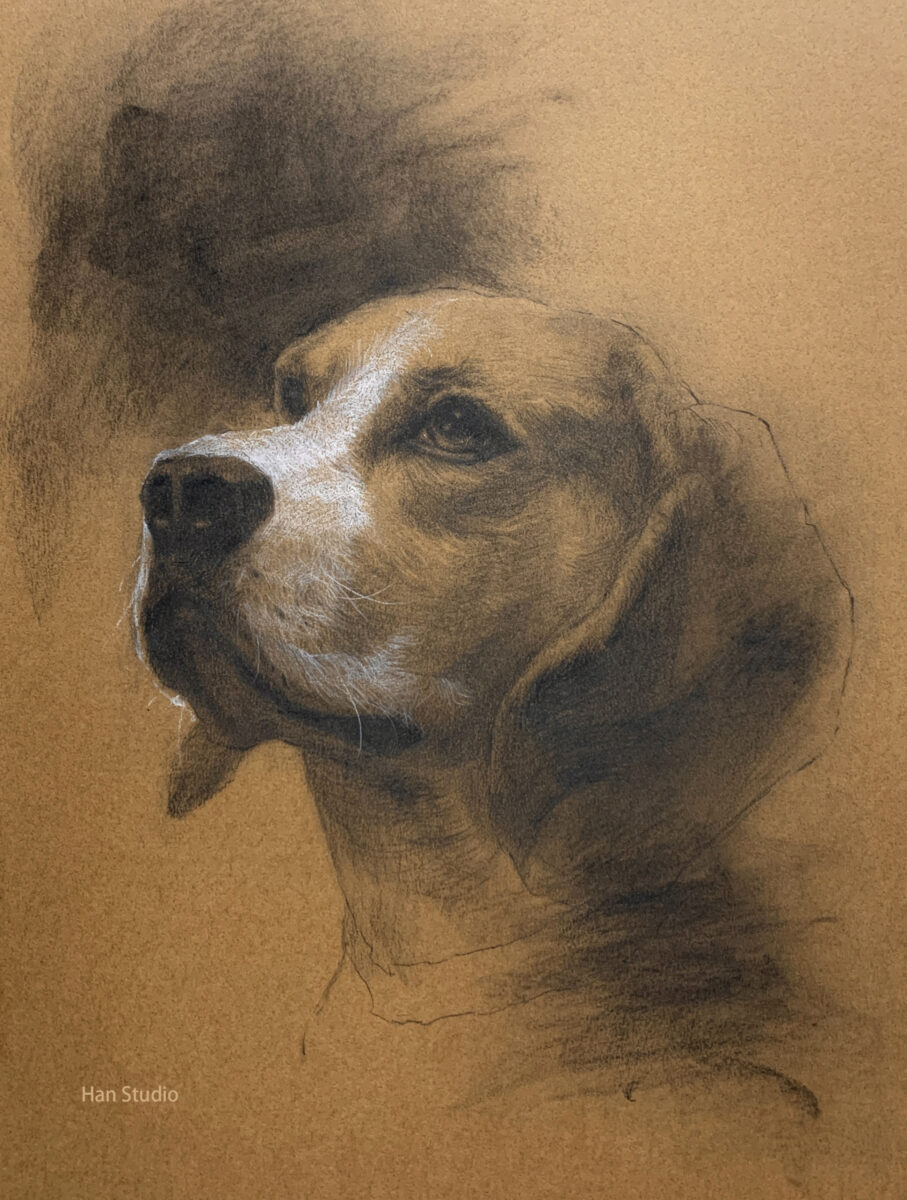
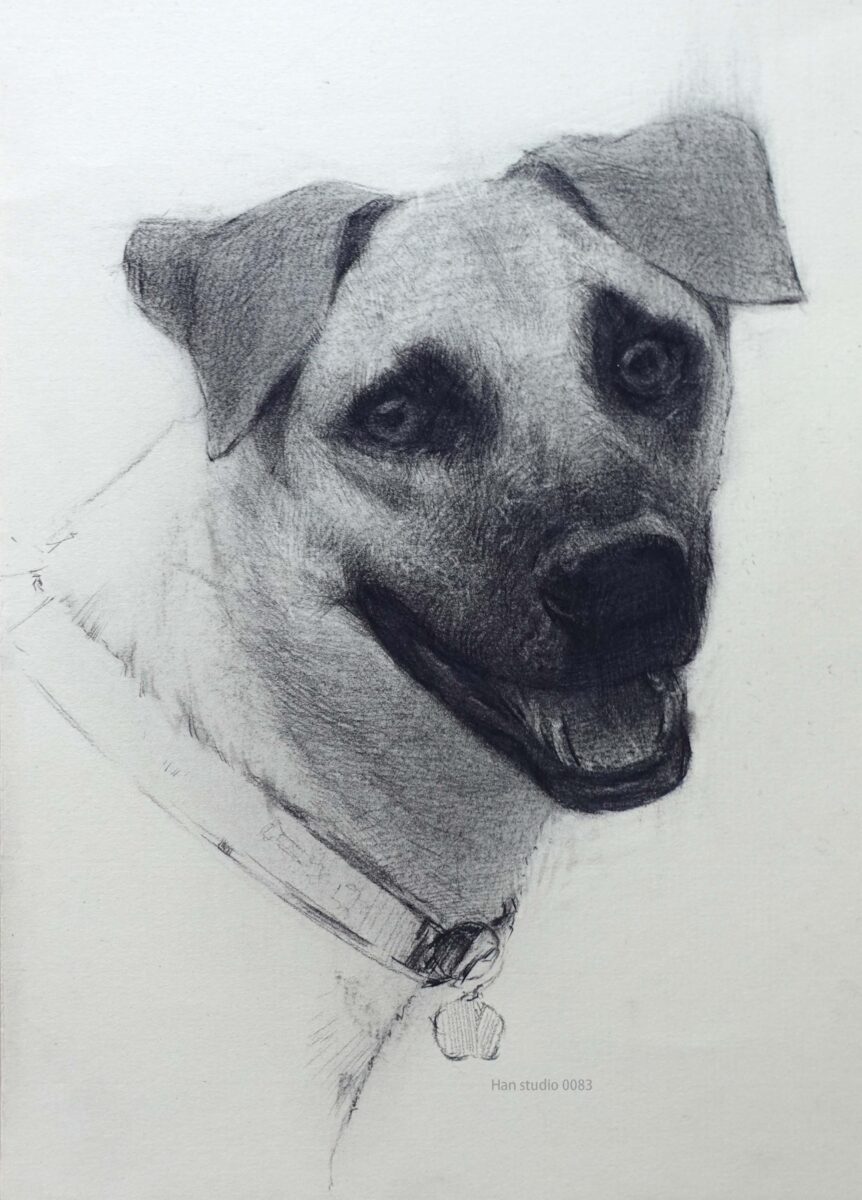
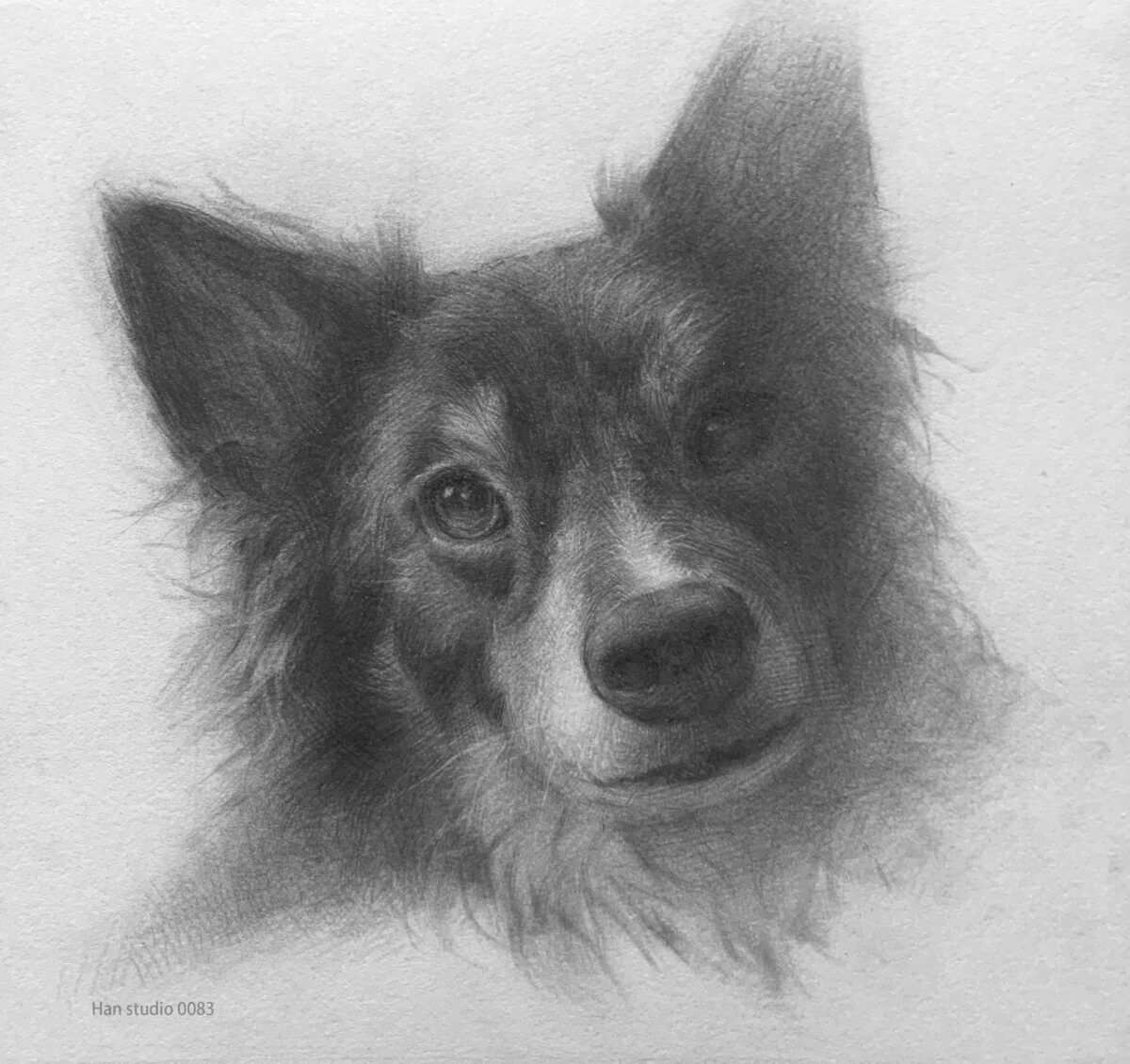
Why dog structure is best approached by “seeing the masses first, then the muscles”
Dogs vary greatly in appearance (Husky, Dachshund, Greyhound),
但but their structural logic shares certain similarities.
Besides proportion, one very common sticking point is “not knowing where the form turns.”
One-sentence core concept:
Besides using lines, dogs can also be built by stacking form masses and plane changes.
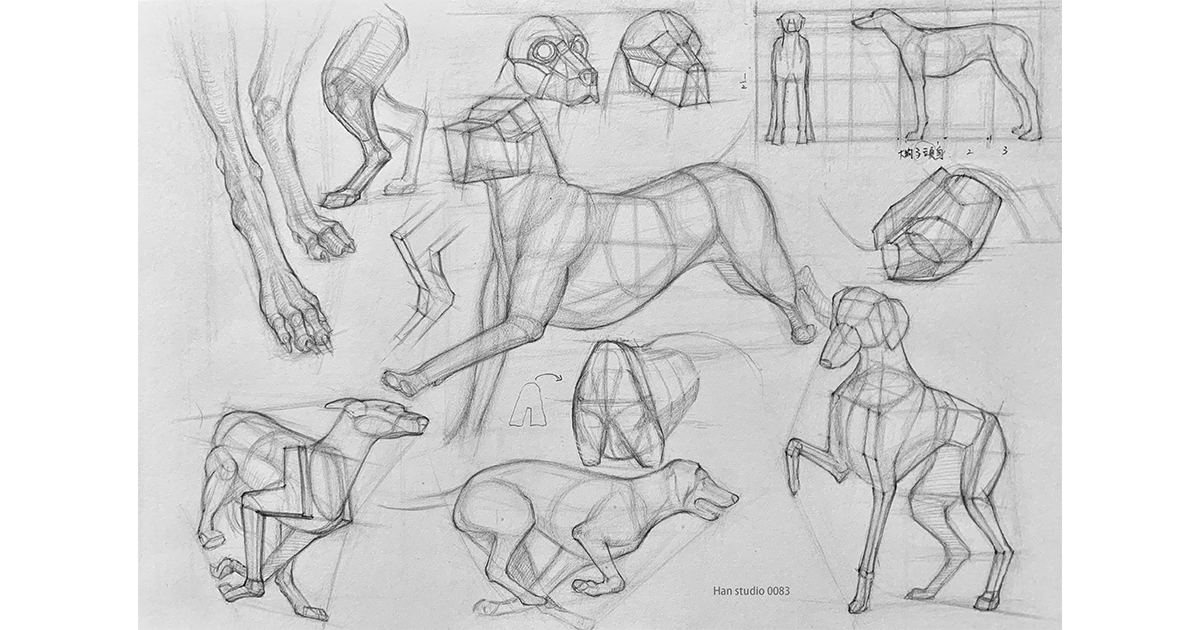
Overall proportion concept of a dog
Two main body masses:
- Ribcage (front half): more upright, thick and solid
- Pelvis (back half): more tilted, the source of power
Pelvis (back half): more tilted, the source of power
Reference image location: top right, a standing side view dog marked with 1/2/3 proportion divisions.
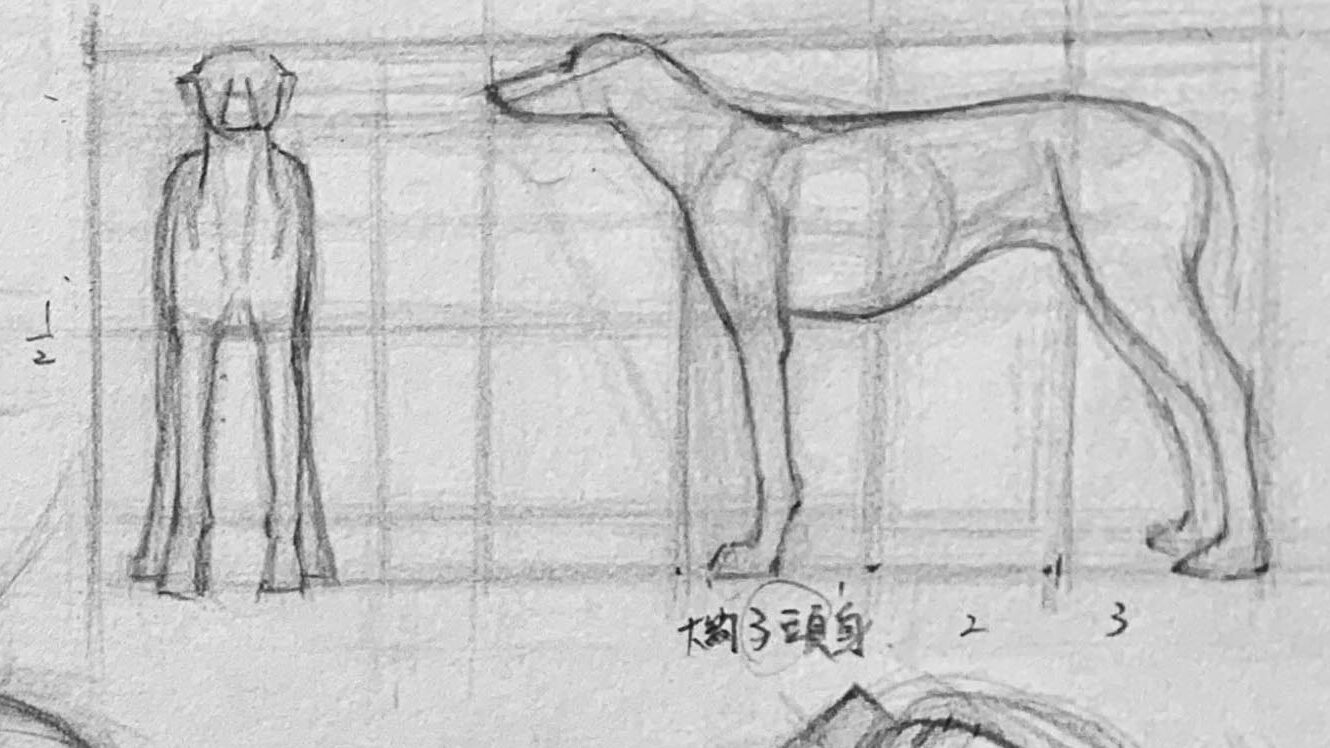
- Explain the overall proportion (head : body : legs is roughly 1 : 2 : 1).
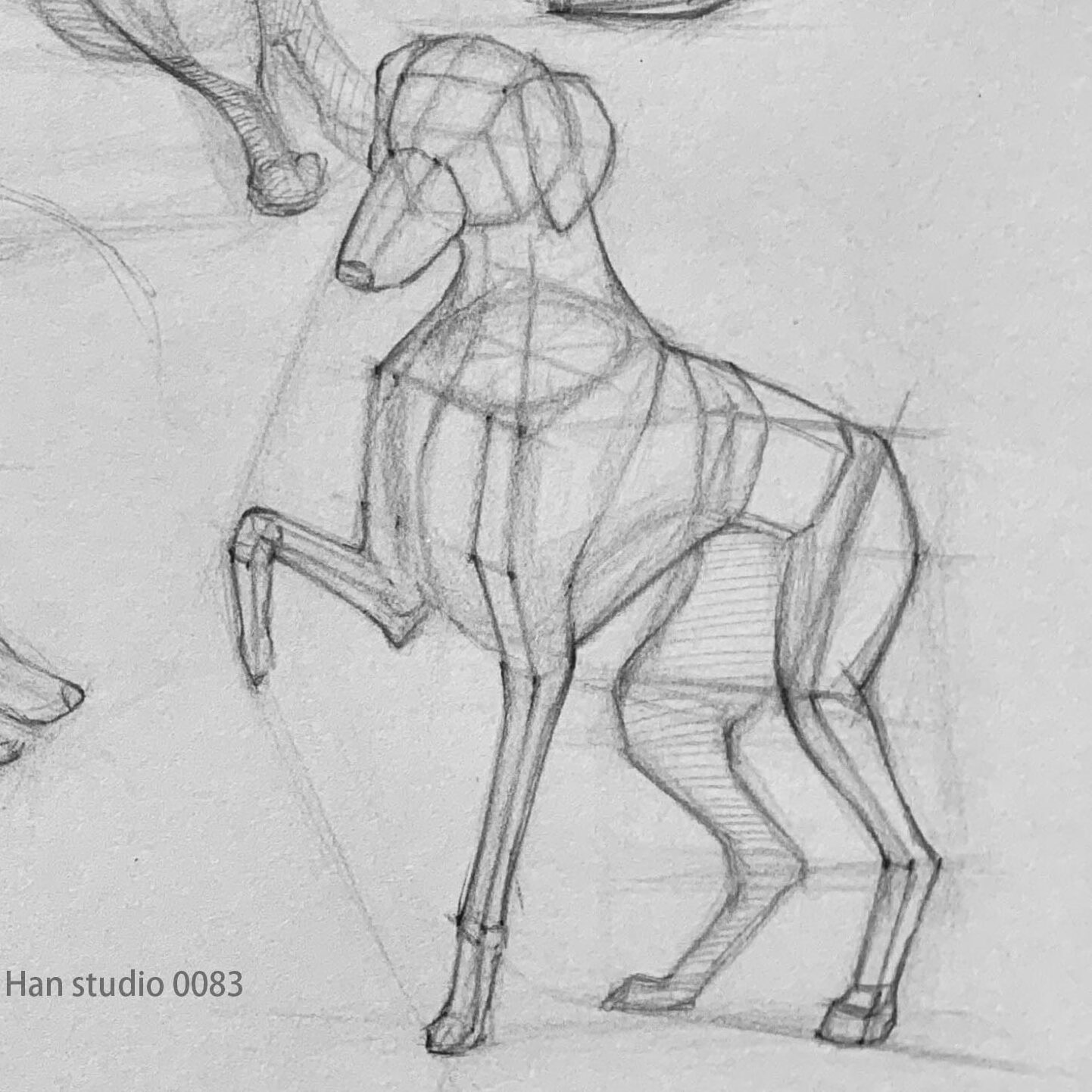
- Use geometric forms (box + ellipse) to break down the body:
- Head: front half-sphere + trapezoid muzzle
- Ribcage: large cylinder + box-like structure
- Pelvis: a slightly cone-like, smaller cylinder
- Limbs: cylinders + joint ball nodes (shoulder, elbow, knee, ankle)
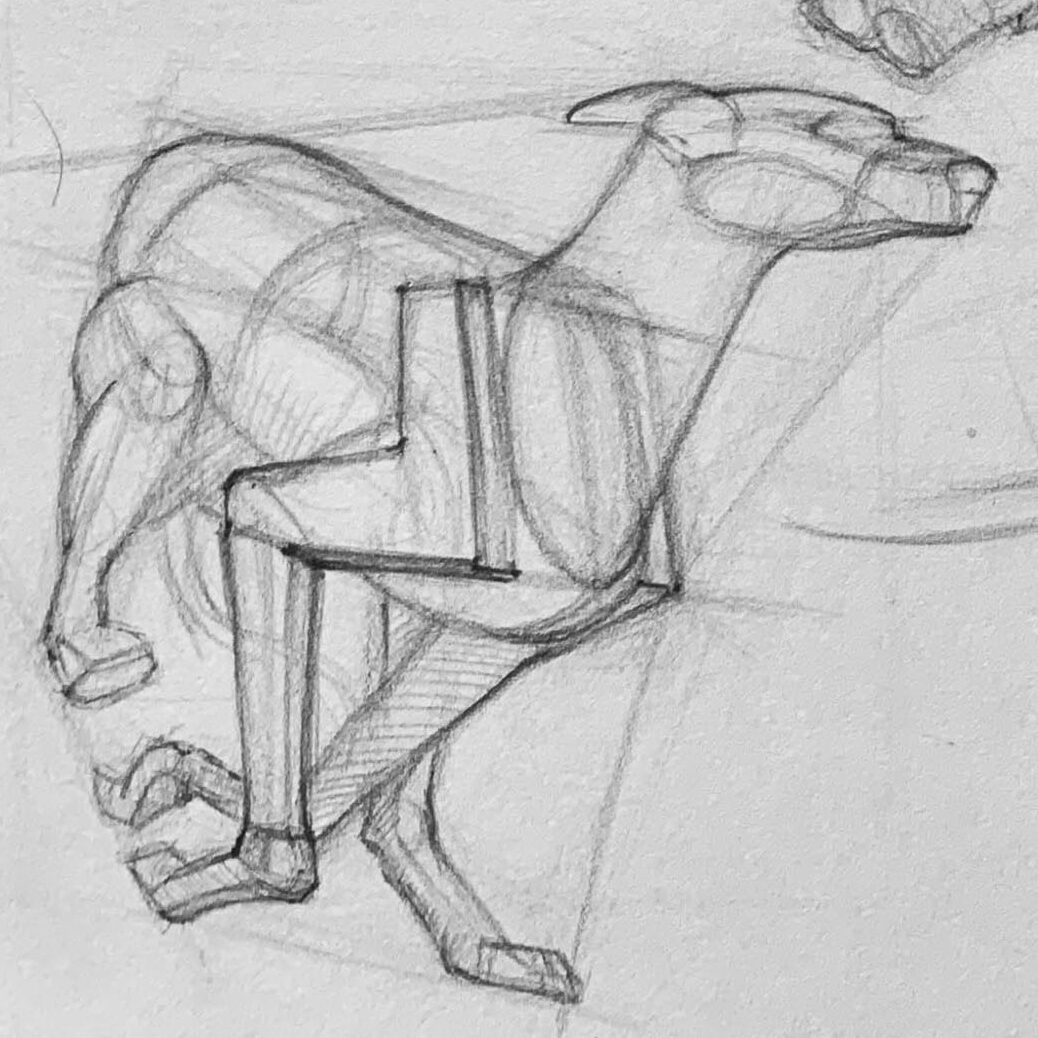
Important proportion concept:
A dog’s rear half is usually more powerful than the front half.That’s why running, jumping, and squatting all drive from the hind legs.
The back line is not a straight line
- Shoulder to back: small undulations, not too dramatic
- Waist to pelvis: a clear drop or curve
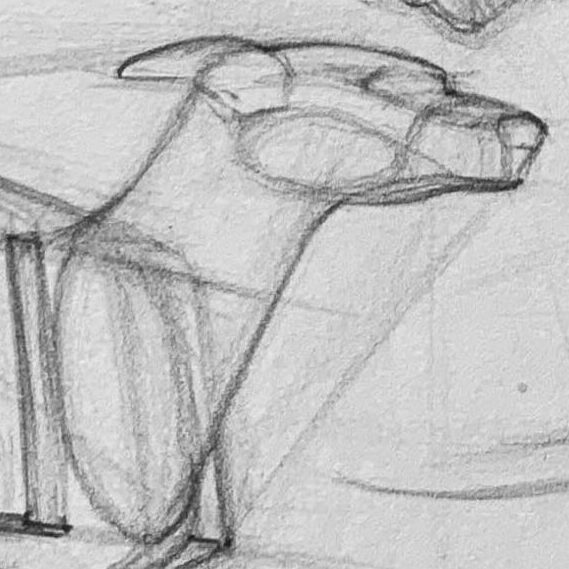
Basic structure – Dog head and neck structure:
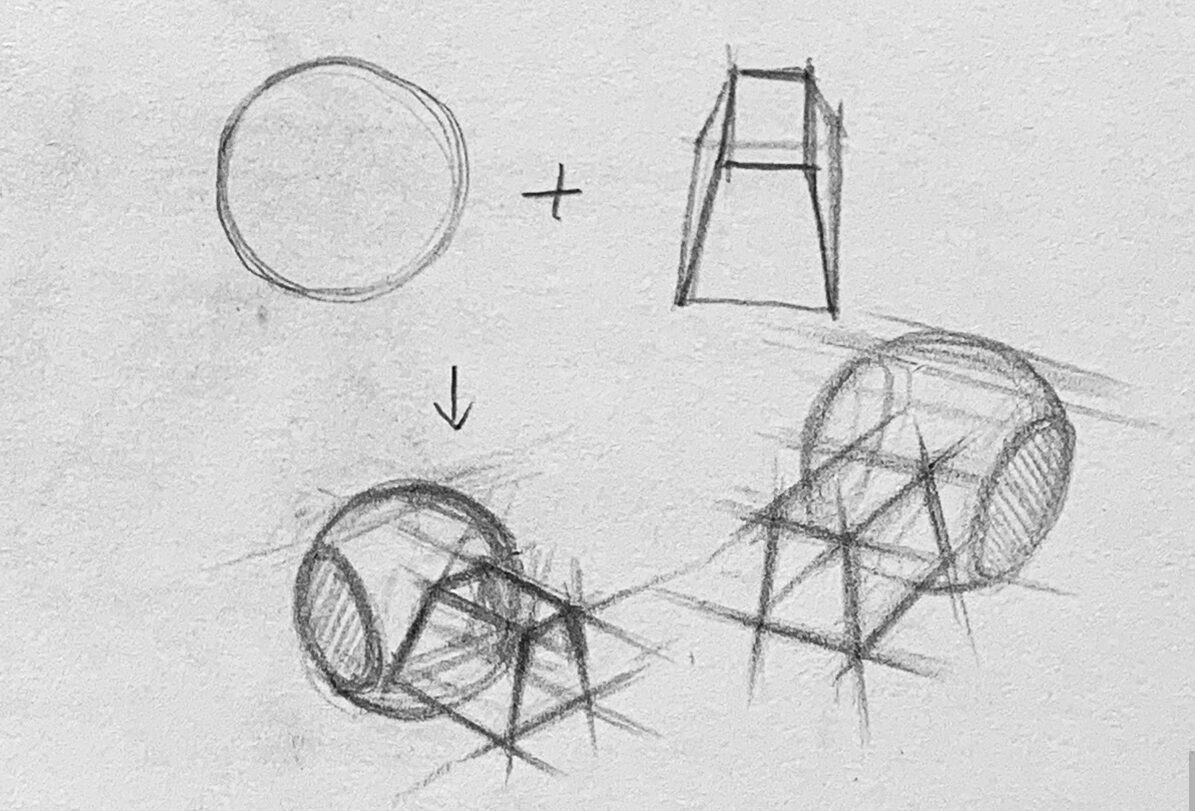
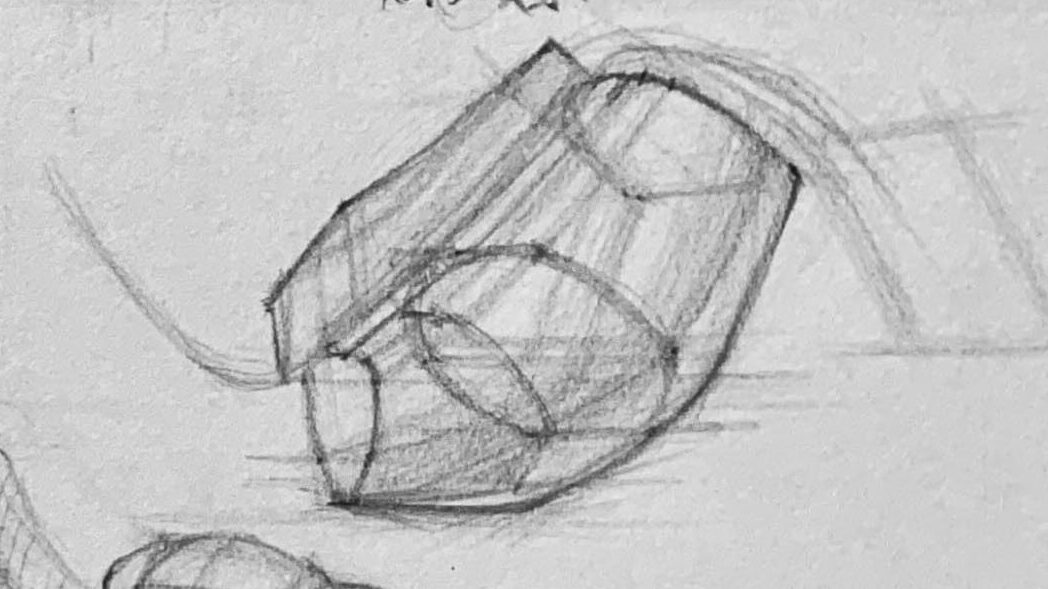
We can simply understand a dog’s head as mainly made of a circle (the cranium) and a trapezoid (the muzzle area).
In the bottom right, you can see simplified basic shapes from two different angles. When drawing, pay attention to the size relationship between the circle and the trapezoid.
Basic head masses
- Cranium: close to a “shaved-down box”
- Muzzle: a trapezoid extending forward
Key point: the direction of the dog’s head turn comes from “the muzzle trapezoid’s pointing direction.”
- Use a cube + cone to construct the planar structure of the head
- Analyze facial structure: elongated nasal bone, sunken eye sockets, protruding cheekbone
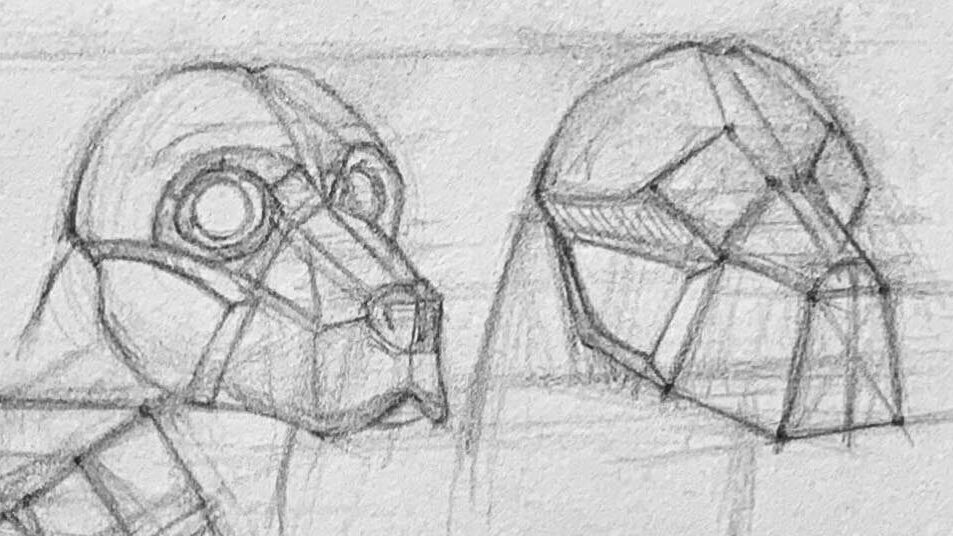
- Ear placement + jaw turning angle (avoid drawing it as a flat shape)
- The neck connects head and chest, showing the direction of an “inclined cylinder.”
The logic of dog eye placement
Not in the exact center of the head
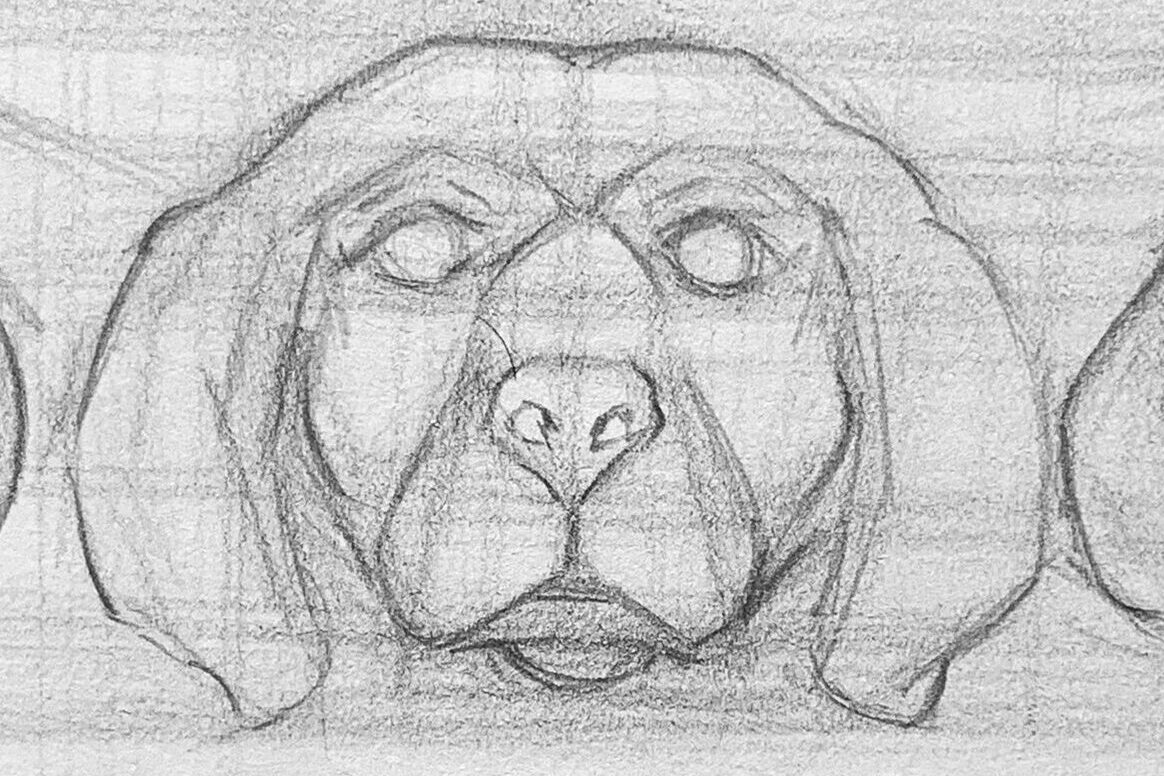
More forward and more to the outside, embedded on a slanted side plane
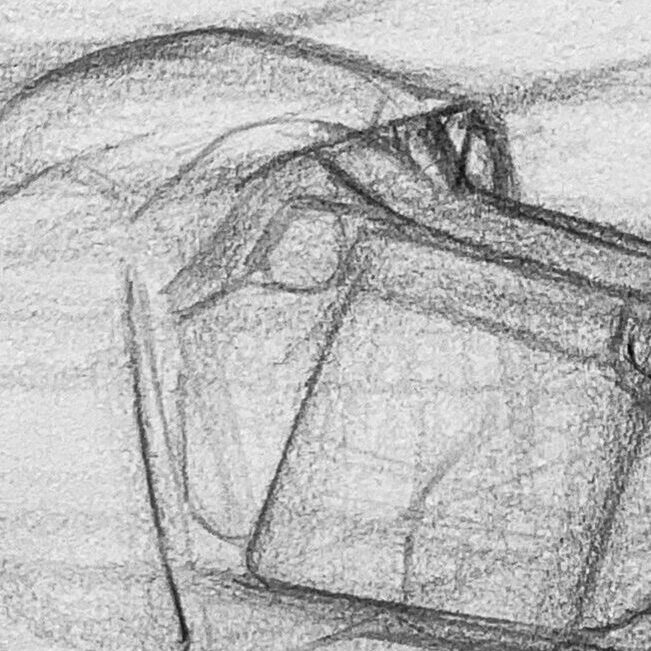
Ears are not decoration
Ear placement determines the “head tilt direction.”
Drop ears, upright ears → same structure, just different add-on shapes
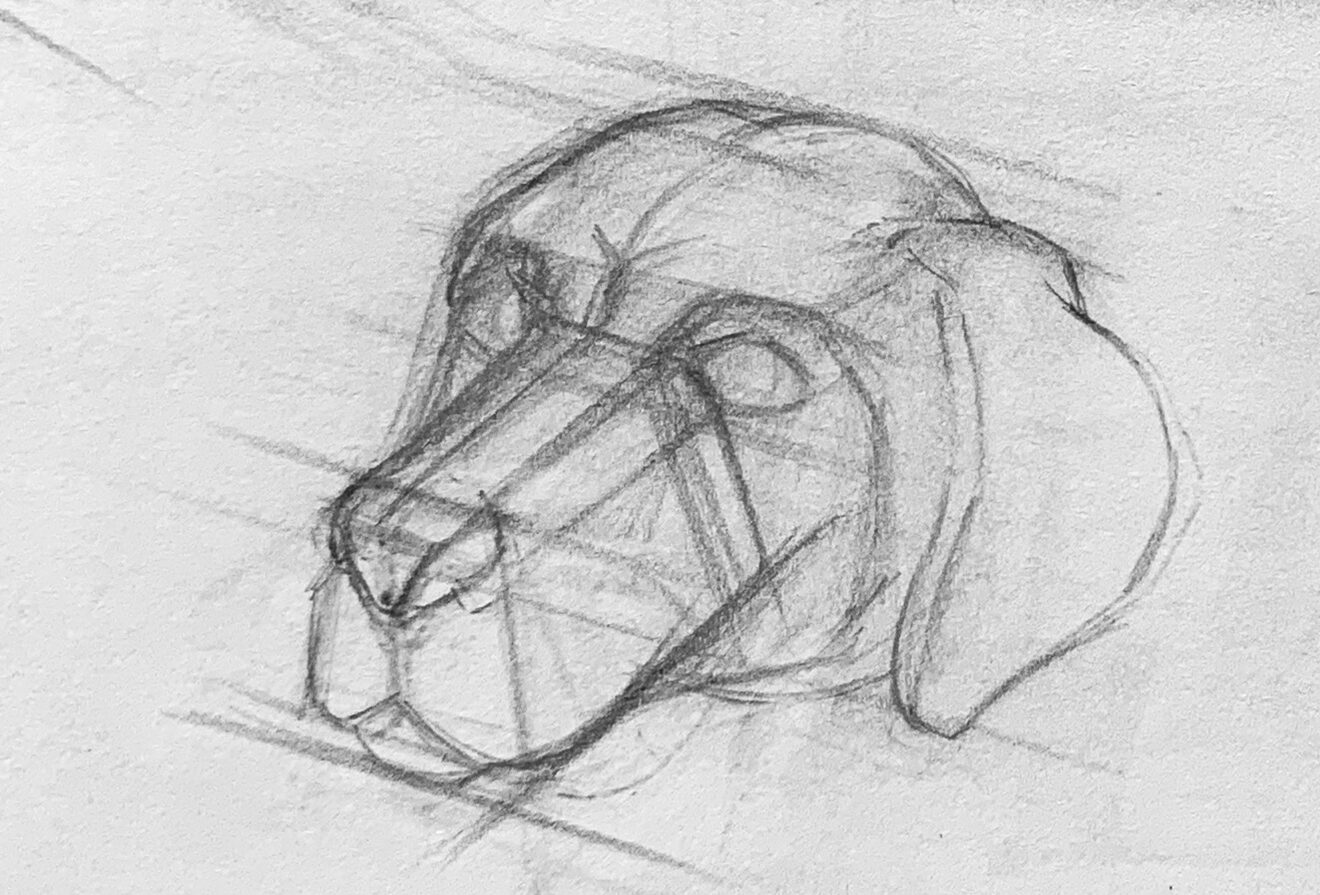
Build on the basic shapes by gradually adding details such as the eyes, nose, and ears. If the dog you're referencing has a turned side face, note that the face will appear larger on the side facing forward and smaller on the turned side.
Dog perspective and proportion – different angles:
When drawing dog heads from different angles, pay attention to:
- The overall viewpoint and perspective direction
- The positions of structural landmarks
- Pay attention to which way the dog’s face is oriented—for example, turning to the left (reference image below), so the right half of the face occupies more visible area.
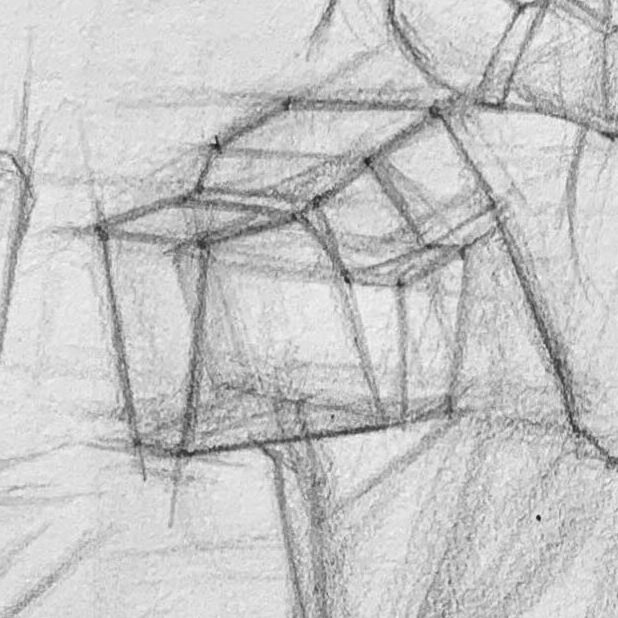
Forelimbs: like a “hanging pillar + a bent wrist”
Forelimbs ≠ hind limbs. They are not left-right symmetrical copies, but systems with completely different functions.
- 前肢功能:Forelimb function: bearing weight, supporting, braking
- Hind limb function: propulsion, jumping, explosiveness
As long as the function is different, the structure must be different.
Functional role of the forelimbs
- Carry body weight
- Stabilize the body’s center of gravity
- Absorb impact on landing
Key understanding:
Forelimbs are more like a “pillar + shock absorber.”
Key structural knowledge points you must know about the forelimbs
(1) The forelimbs have “no bone directly attached to the torso”
There is no clavicle fixation like in humans.They are “suspended” beside the ribcage by the scapula + muscle groups.
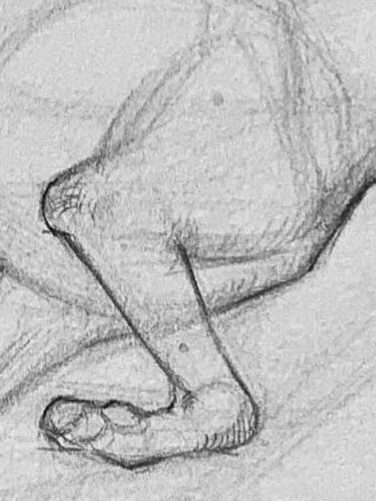
Resulting effects:
- Forelimb range of motion is limited
- The structure looks stable and straight
(2) The forelimb bone direction tends to be “straight up and down”
- Scapula: slanted against the side of the ribcage
- Upper arm: short, tucked inward
- Forearm: straight, pillar-like
- Paw: flat to the ground
Forelimb observation focus:
Front toes step straight onto the ground, toes clearly separated::
Each toe is like a small cylinder-to-cone shape; the central toe is longest, and the outer toes gradually get shorter.
Visual features:
Scapular movement, no clavicle support::
Unlike humans, a dog’s scapula is not locked to the torso, but “slides against the ribs.” So when a dog runs or turns, the scapula swings and shifts relative to the ribcage.
Short upper arm, longer lower arm::
The humerus (upper arm) is short and the radius/ulna (lower arm) are long, creating the feeling that the elbow stays close to the body while the forearm hangs vertically downward.
Visible wrist joint bump::
The wrist forms a clearly visible “small bulge,” a common structural node.
- Forelimbs have “smaller turns”
- The center-of-gravity line often stays close to vertical
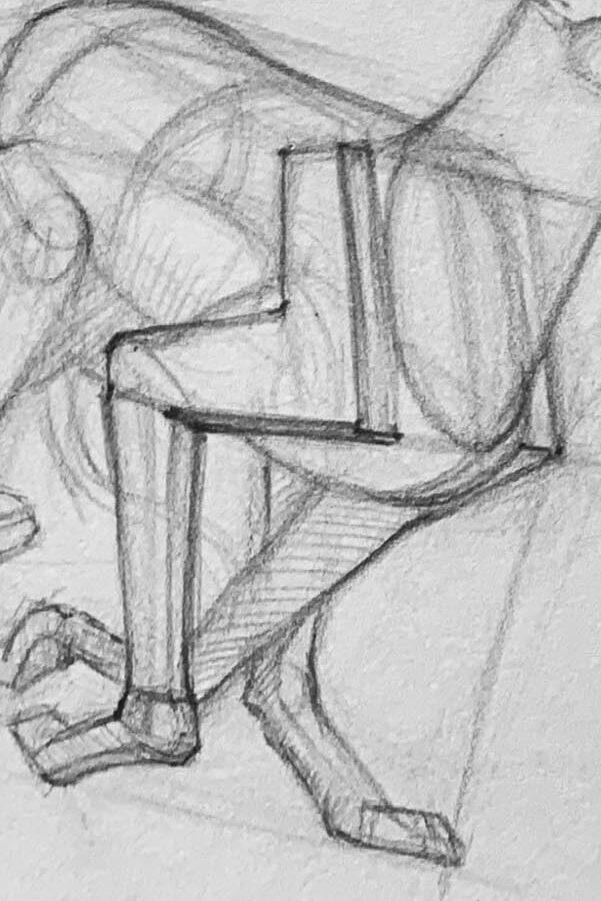
Geometric understanding of the forelimbs
- Scapula → similar to an elongated slanted rectangle
- Upper arm + forearm → rectangular prism, cylinder
- Paw → flat quadrilateral
- Forelimbs: shoulder → elbow → wrist (wrist connects to the paw)
Looks like a human arm, but its function is support
Functional role of the hind limbs
- Propel the body forward
- Jumping, running, acceleration
- Provide dynamic movement in posture
Key understanding:
Hind limbs are like a “spring + engine.”
Key structural knowledge points you must know about the hind limbs
(1) The hind limbs “connect directly to the pelvis”
- Power is concentrated
- Large range of motion
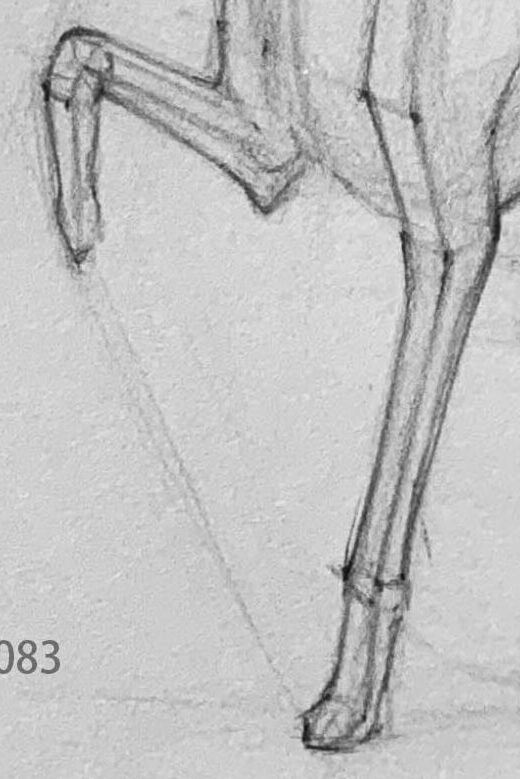
Hind limb: hip → knee → Achilles (hock) → metatarsals (paw)
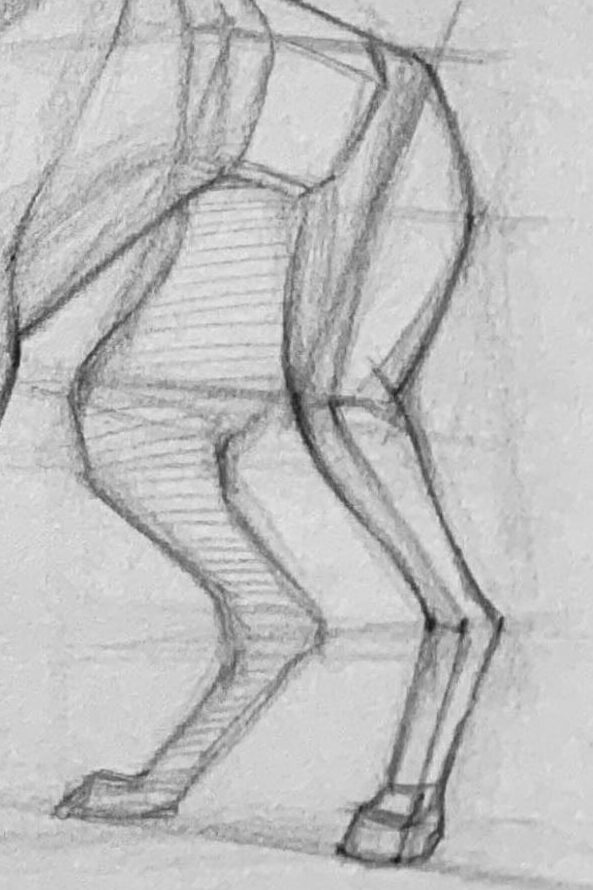
Resulting effects:
- More turns in the leg structure
- Posture variations become very obvious
(2) Typical “Z-shaped structure”
- Thigh: tilts forward
- Lower leg: folds backward
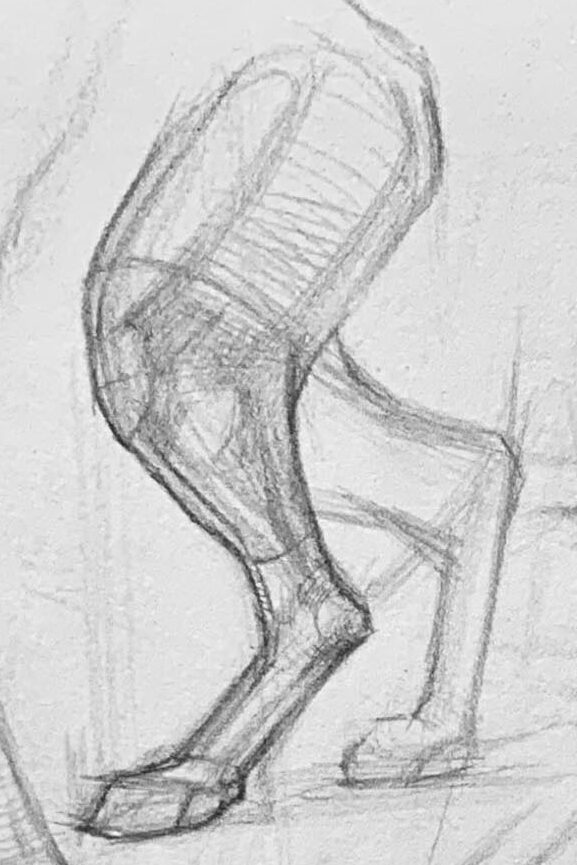
- Ankle lifted (not on the ground)
- Paw: only the front part contacts the ground
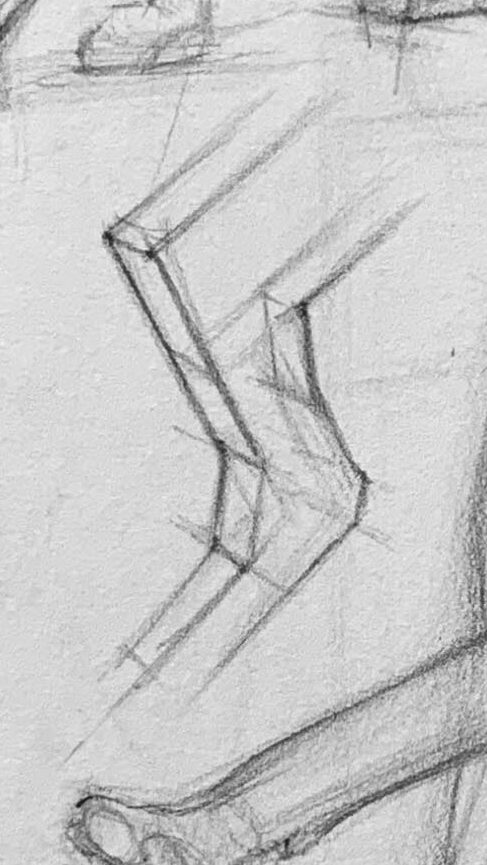
Limb structure and joint bending logic
Body turns and muscle masses
- Analyze the turns between the ribcage and pelvis, using slanted planes + arcs to build the back’s sense of motion.
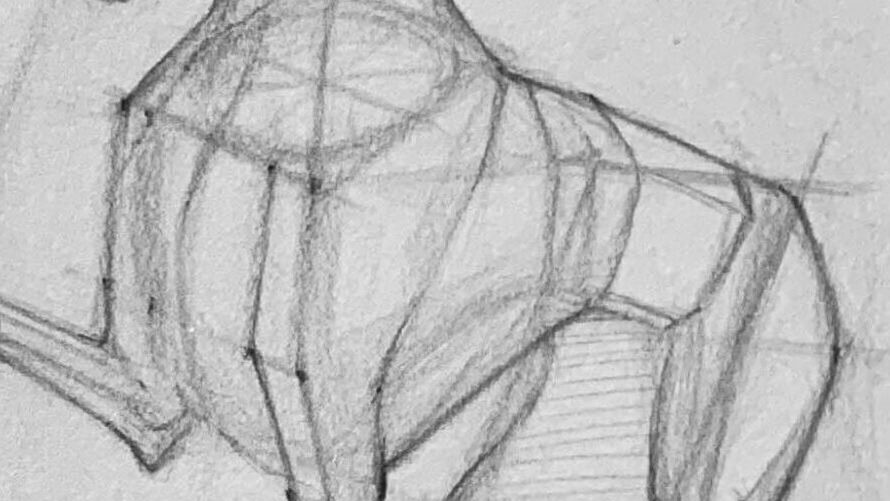
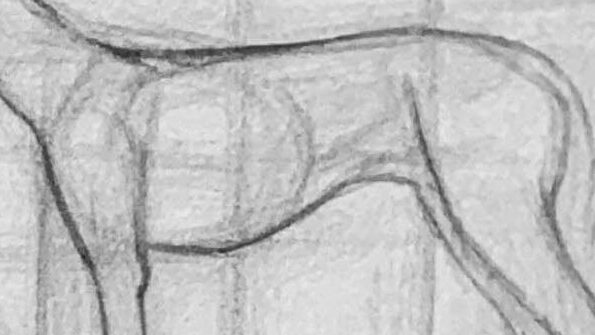
- When a dog runs, the pelvis and ribcage will rotate in angle, increasing the overall dynamic feel.
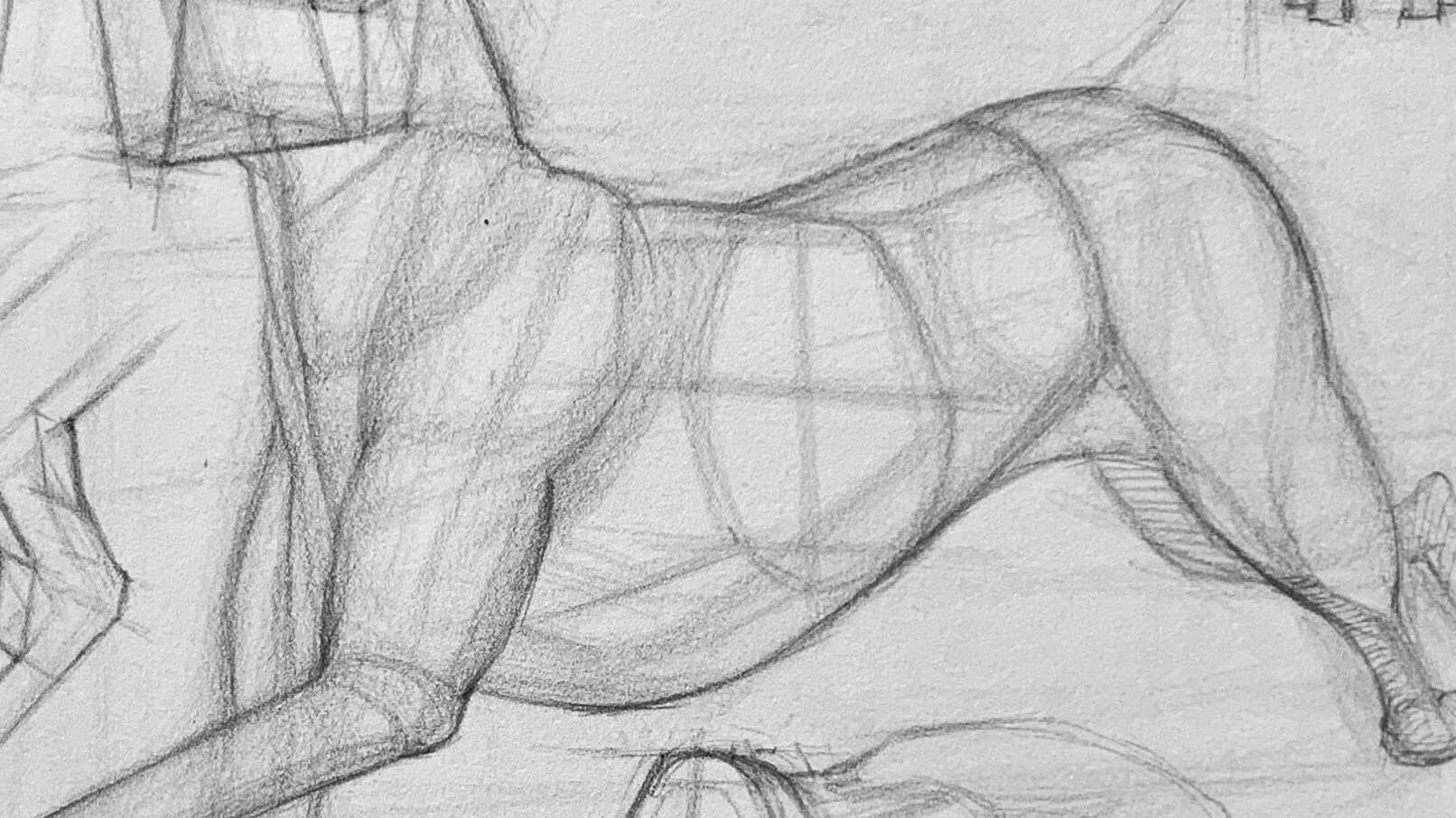
- The cylinder cross-section diagram above clearly explains the ribcage curvature and where the abdomen tucks in.
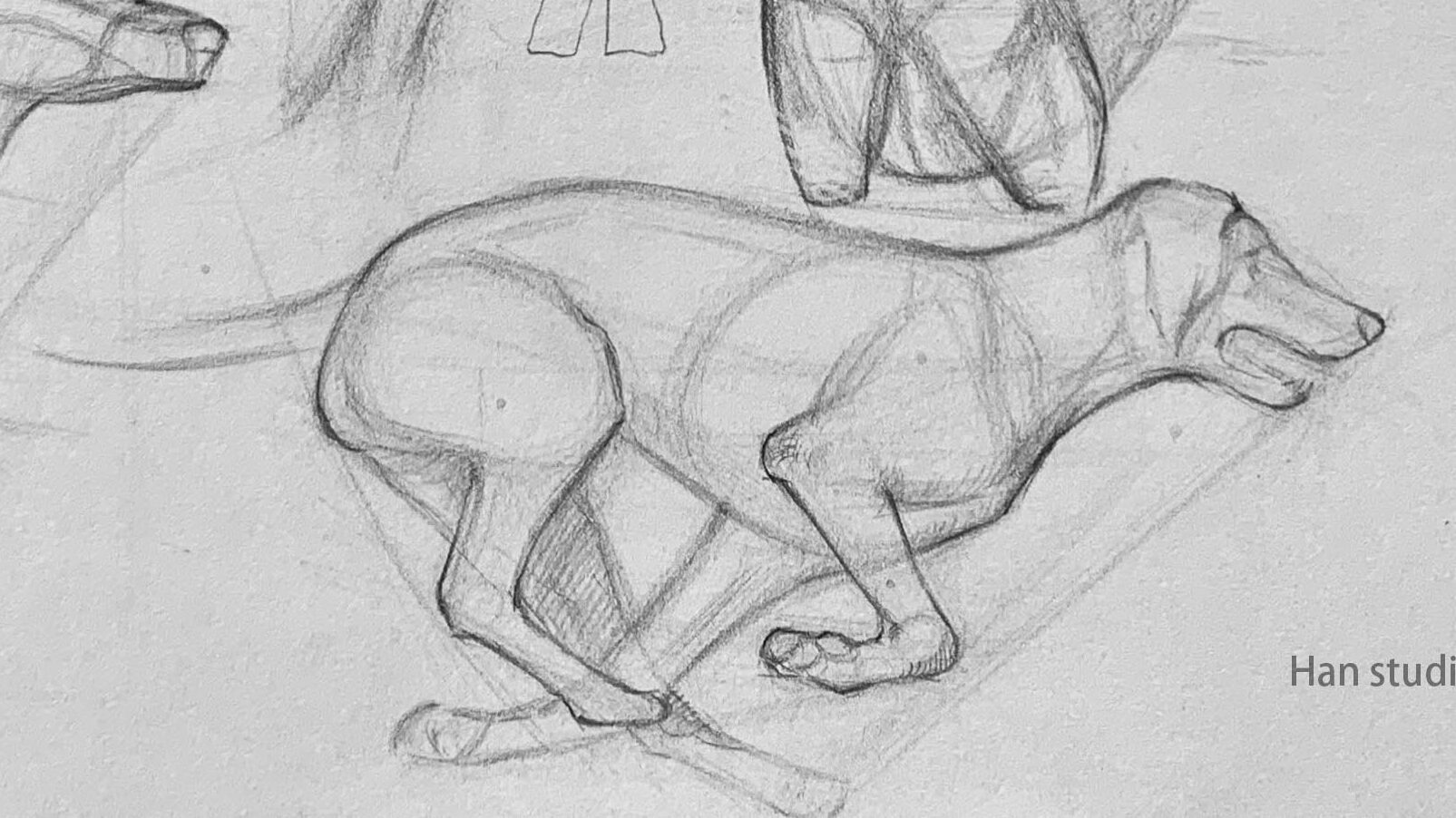
Dog dynamic poses and gait observation
- Analyze how the legs compress in a sitting pose, and how the ribcage tilts forward (chassis lowered).
- In running motion, how the center of gravity pushes from the hind legs into the forelegs.
- Stepping rhythm of the limbs (can add: when the hock contacts the ground, it’s a power point)
Observation of claws and paw pads
- Simplify the paw into an “inverted triangle (or a top-wide bottom-narrow quadrilateral) + cylindrical toe joints”
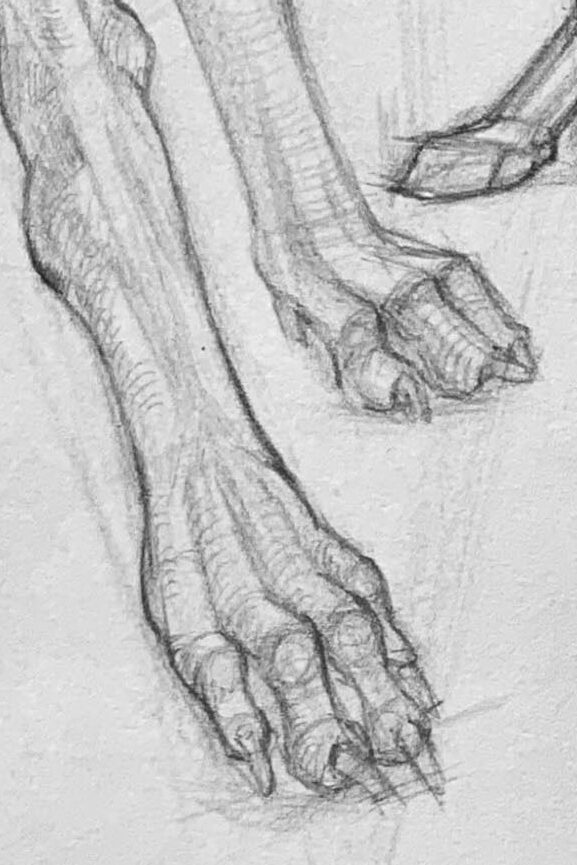
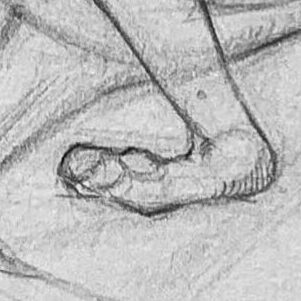
- Leave space in front of the claws to avoid flattening them
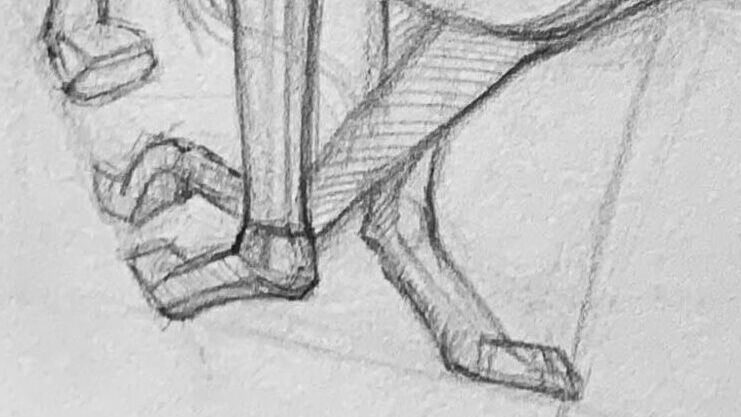
- Note that the toes are not perfectly symmetrical
Summary: how to draw dogs and extended practice
I encourage you to slowly build a drawing habit from “form breakdown” to “dynamic observation.”
Suggested practice: start with different breeds/proportions like Greyhound, Golden Retriever, Dachshund, etc.
__
I hope this step-by-step description helps you recognize and understand how to draw dogs. If there’s any subject you want to see or any drawing method you want to learn, feel free to leave a comment or message me. Happy drawing!
If you're interested in learning to draw but don't know where to start, or if you'd like to understand the knowledge behind drawing,
feel free to join my LINE and contact me. In my classes, I organize drawing methods in a clear and structured way.
Click here to learn more about my drawing courses!
Extended Animal Sketching Articles:
How to Draw a Cat with Pencil:Mastering Proportions & Structure
How to Draw a Koi Fish with a Pencil: Fish Sketching Tutorial
How to Draw Birds: Master Sketching Body Structure
How to Draw Primates: Proportions, Anatomy, Dynamic Poses
Sketching Lions: Simplifying Head and Torso with Basic Shapes


Leave a Reply