Introduction to Portrait Head Structure Practice Draft

NT$ 300

Practice understanding proportion, orientation, and surface transitions with multi-angle examples.

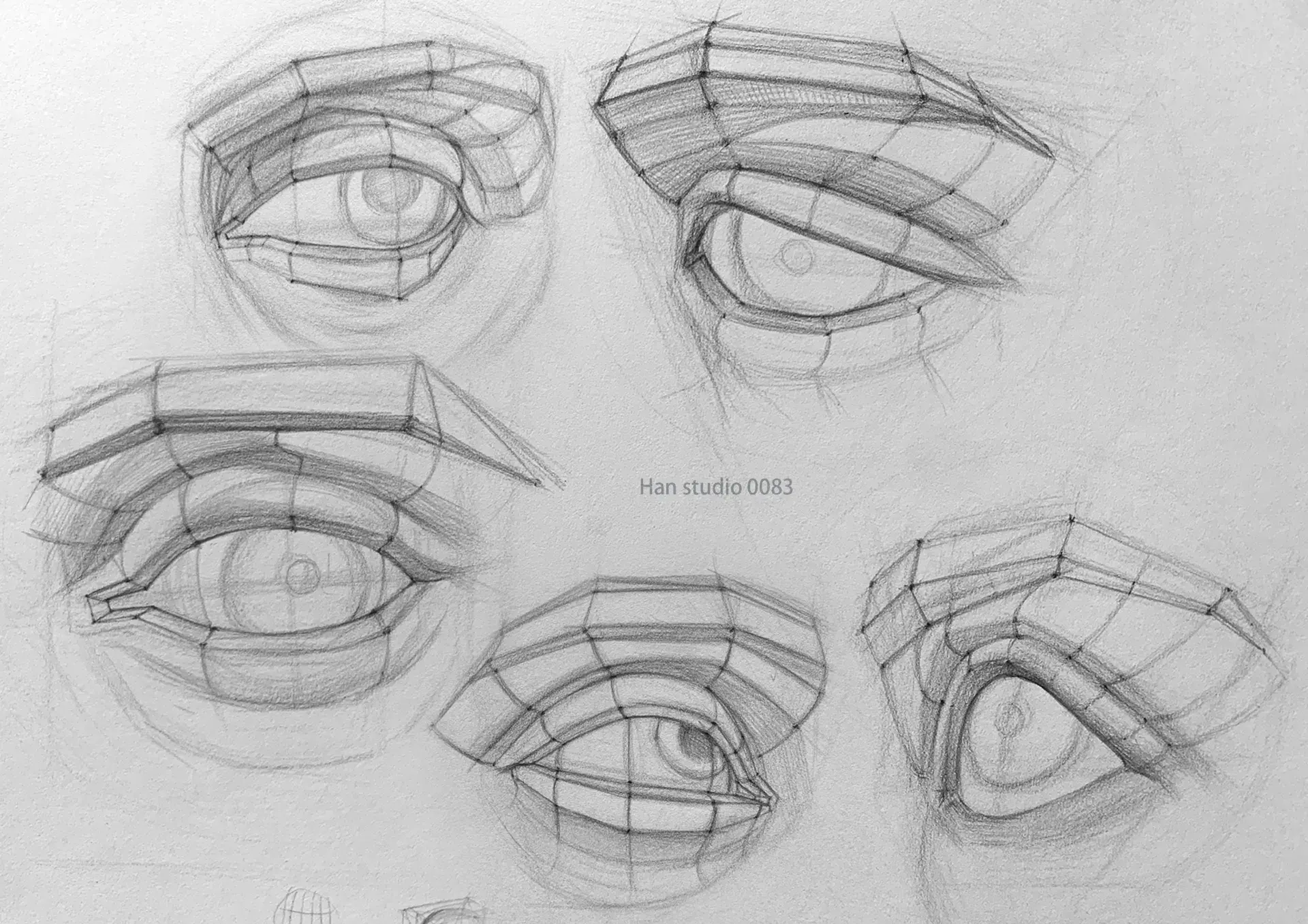
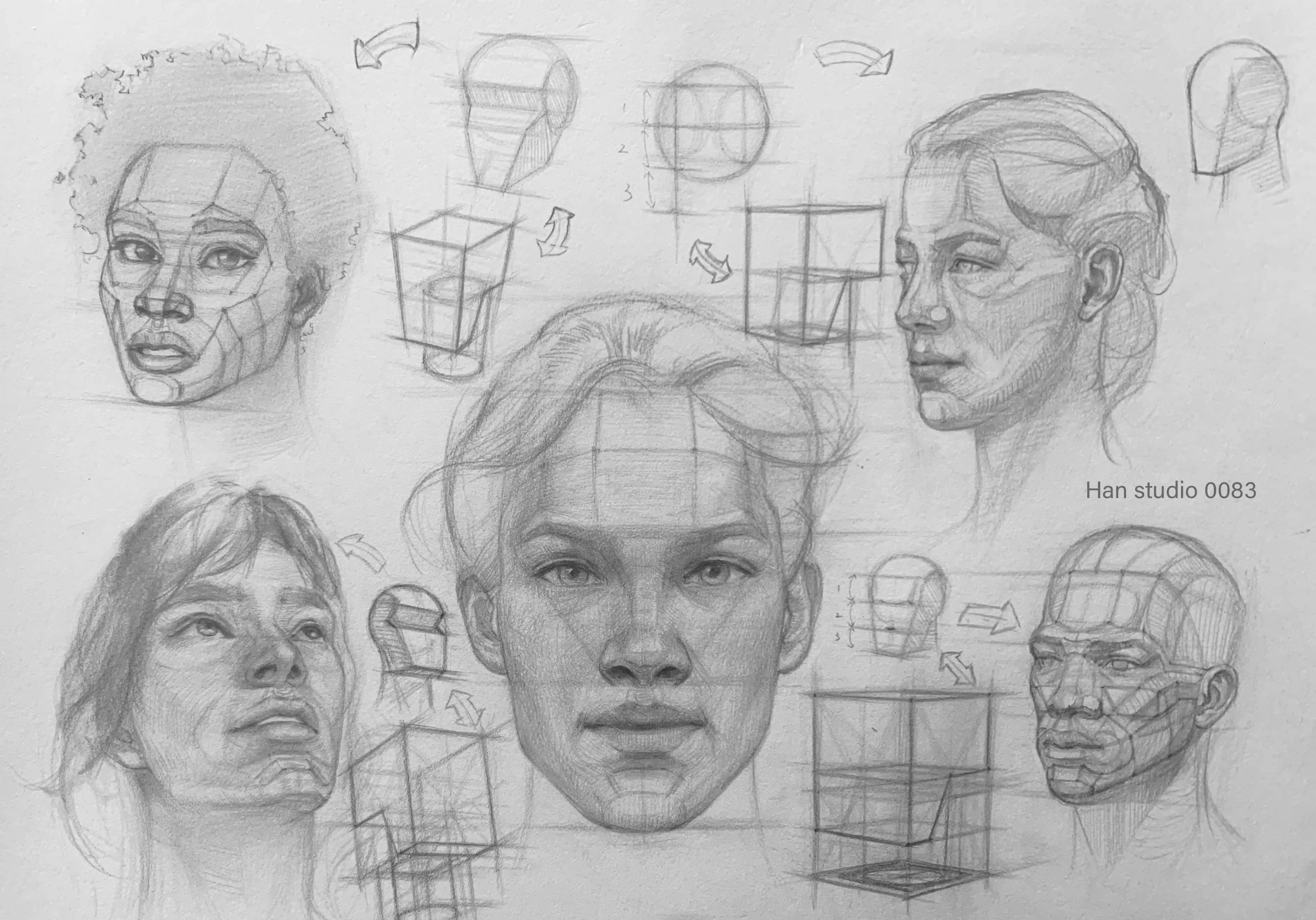
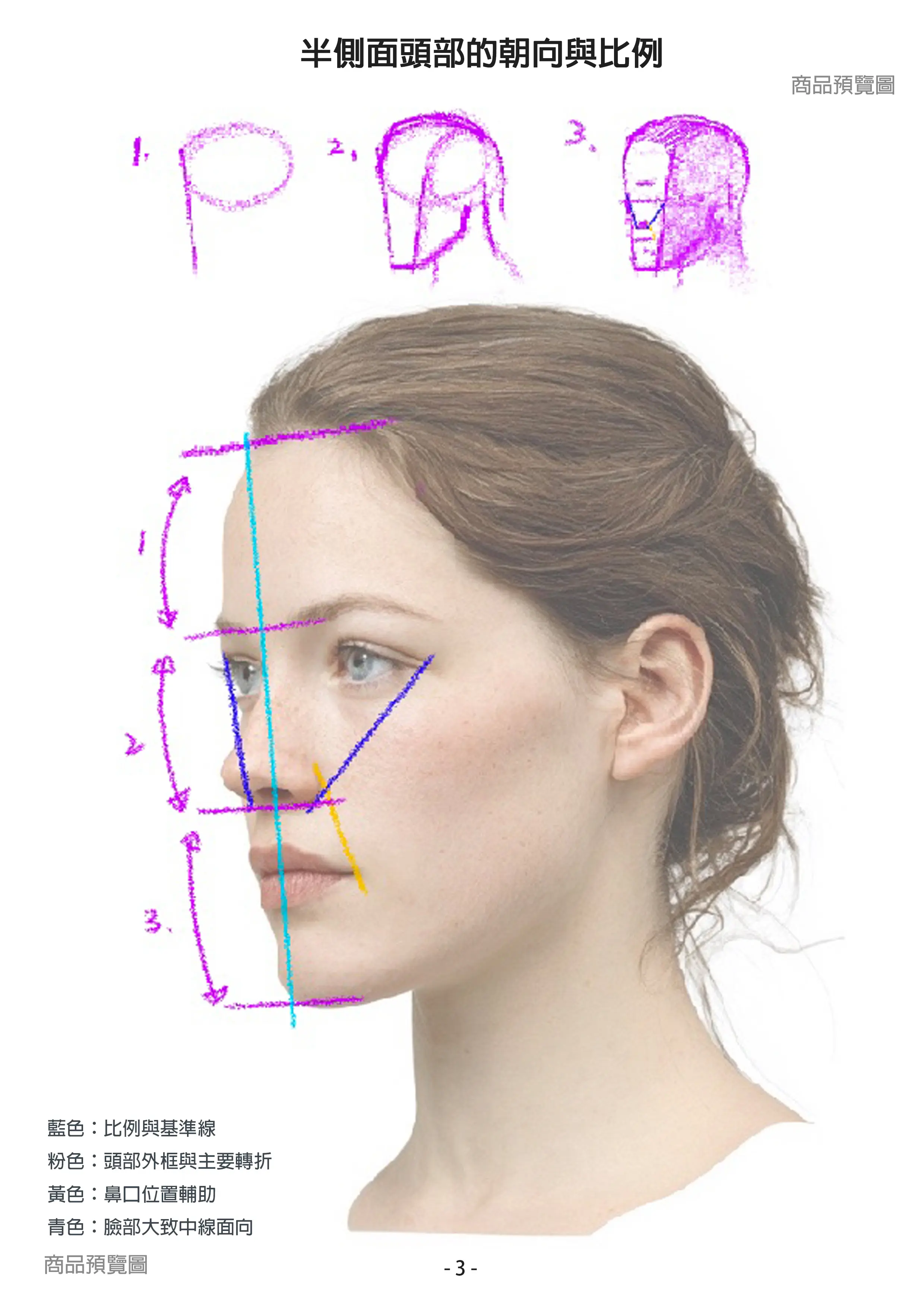
The content begins with an analysis of the colored original image proportions, helping to understand head shape, upper, middle, and lower facial sections, nose and mouth placement, and facial orientation. It then combines this with grayscale drawing practice to organize facial turns from the front, side profile, male head, and looking up at an angle.
Tracing isn't for copying outlines, but to help understand facial dimension and the order of strokes.

Suitable for those who want to learn portraiture but often get stuck on the placement of facial features, changes in angle, and the three-dimensionality of the face.

This PDF helps you understand head direction, proportion segmentation, and facial turns through color structure analysis, grayscale draft tracing, and multi-angle case studies, establishing a more stable method for observing portraits.

When drawing portraits, it's often not that you can't see the details, but rather that you don't yet know:

  • Should I draw the head shape first or the facial features first?
  • Why does the aspect ratio change in front, semi-profile, and foreshortened views?
  • The nasal floor, cheekbones, and jawline are prone to appearing skewed when you change your viewing angle because they are prominent facial features with distinct three-dimensional forms.
  • Even after tracing, why is it still difficult to draw with a sense of three-dimensionality?

The purpose of designing a PDF is not for people to simply copy an outline.
but rather helps to organize the complex facial information in the original image into a more easily understood structural order.

Feature

1. First, look at the original image proportions, then proceed to structural practice.

Organize each group of examples with colored lines first:

  • Simplified head outline
  • Top, middle, bottom ratio
  • Nose and mouth position
  • Facial midline and orientation

Let beginners first understand "how to interpret the original image" before practicing further.

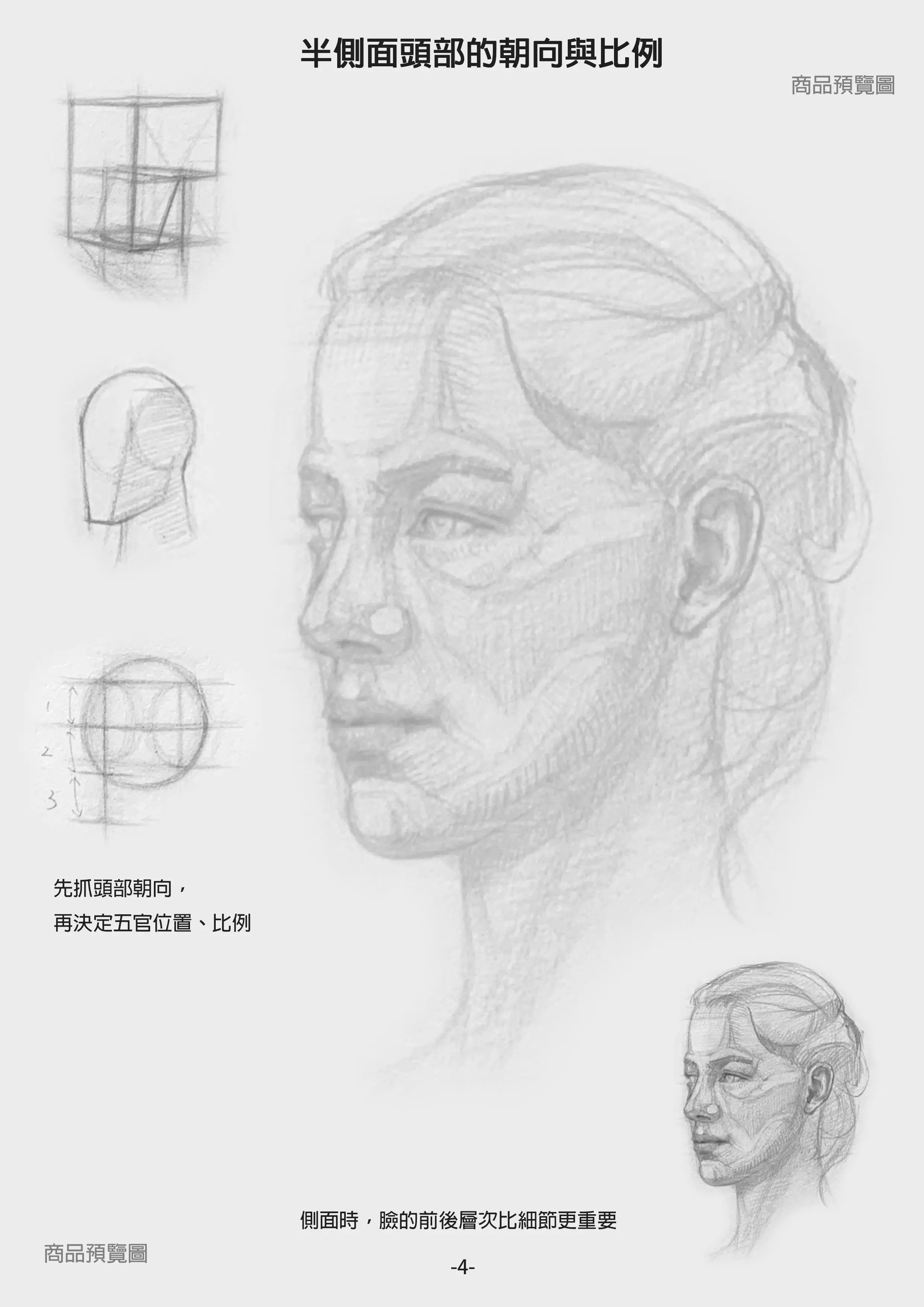
2. Use the gray background draft for tracing to aid in understanding surface transitions.

Not tracing directly from the photo,
is to observe through the organized gray draft:

  • The border between the front and the side
  • Major turns in the face
  • Anterior-posterior layers of the nasal floor, mouth, and mandible
  • Stereoscopic changes under elevation and profile

3. Includes multiple common head angles

Contents include:

  • Front head large section division
  • Half profile head shape and facial planes
  • Half-face orientation and proportion
  • Structural divisions of the male head
  • The nasal base and mandibular structure from an elevated angle

Help practice understanding heads from different perspectives, rather than just drawing them from a single angle.

4. Each page includes practice reminders to help establish the order of writing.

In addition to image analysis, include brief text reminders.
Help understand which direction, proportions, or structural focus should be prioritized on each page.


Target audience

This PDF is suitable for:

  • For those just starting out with pixel art and want to build a foundational understanding of structure.
  • Someone who often feels their facial features shift position
  • Someone who doesn't know how to start writing when they change their perspective
  • For those who have read portrait tutorials and want practical exercises
  • People who want to experience teaching content with a low barrier to entry

What will you get?

Contents include:

  • Instructions page
  • Color Original Image Ratio and Structure Observation Page
  • Gray sketch tracing practice pages
  • Key practice reminders on each page
  • Wrap-up practice suggestions and extended learning resources

Product Value Statement

This is just a plain reference image pack.
It's also a practice material to help you understand "how to see, how to break down, and how to practice" figure structures.

If when drawing portraits, you often get stuck at:

  • The facial features are not properly aligned.
  • Lack of facial dimension
  • It easily gets crooked when you change the angle.

This draft is more suitable as an introductory supplement.


If you want to first confirm whether the content direction is suitable for you,
You can refer to this article first.Portrait articleThen decide whether to buy practice drafts.