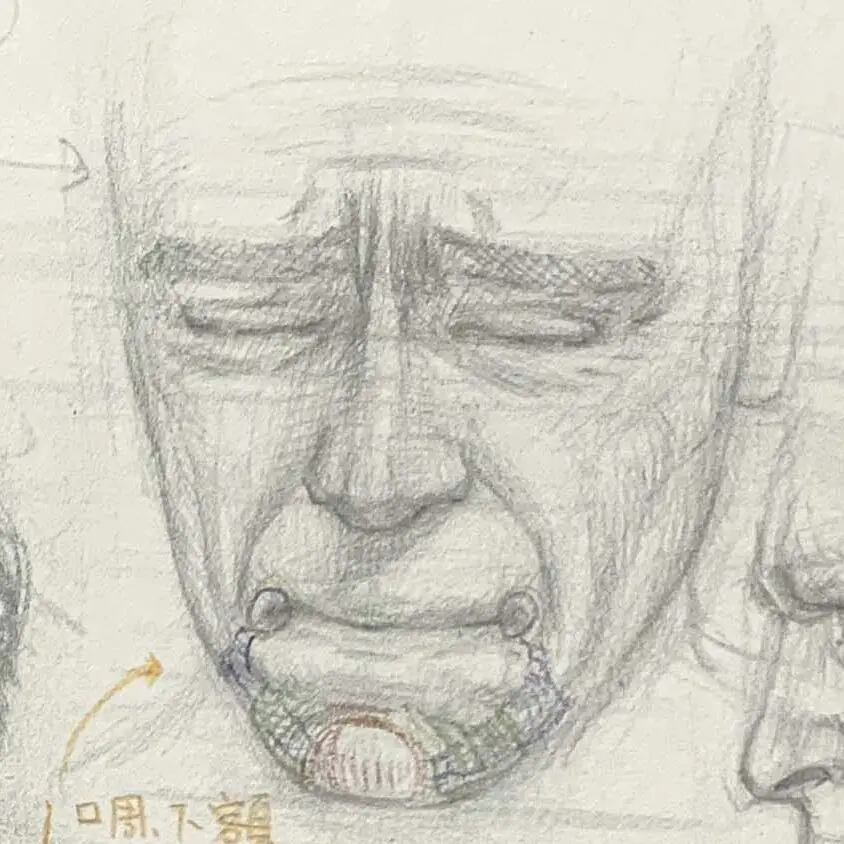
Tension in expressions comes from changes in muscle structure.
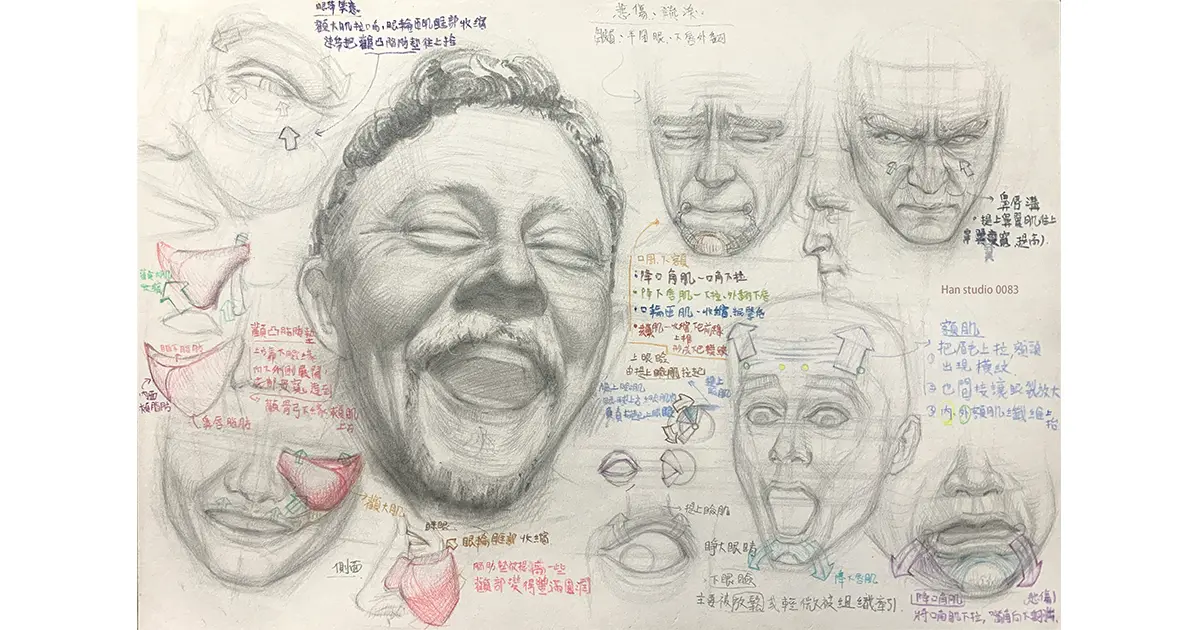
"Why do some faces always look weird?" → The deformation of the expression muscle in conjunction with the fat pad is the key to the realism of the expression.
In this article, we will start from the expression drawing of laughter, crying, anger and surprise, and disassemble the related structure to help you improve the emotional tension and three-dimensionality of the drawing of the character's face.
This article will focus on several common emotions (e.g. happiness, sadness, anger, surprise), analyze the corresponding muscle changes, with practical illustrations, to help you build up a sense of "moving face structure" from the ground up.
Most of the expression muscles do not connect to the bones, but to theskinThe appearance of the face is affected.
Mostly unilateral action, often with asymmetric movements on the left and right side of the face, such as.throw amorous or flirtatious glances at sb (esp. of a woman)
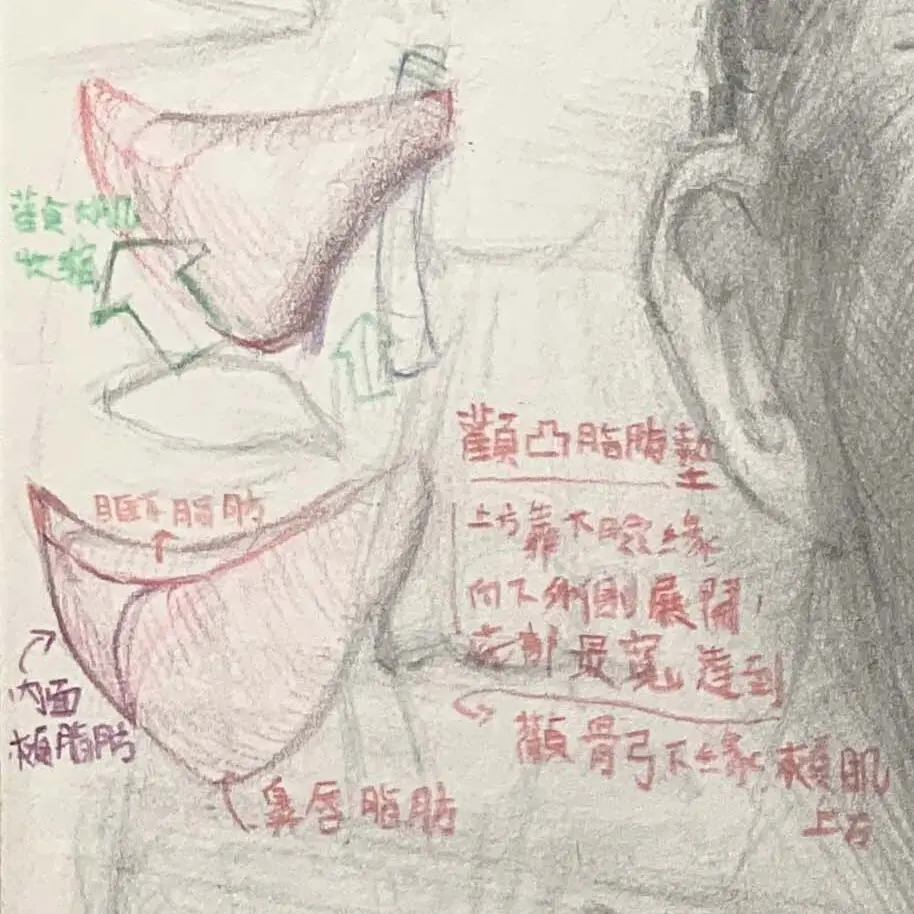
2. Facial fat pads (e.g. zygomatic fat pads) are also pulled and squeezed by the muscles.
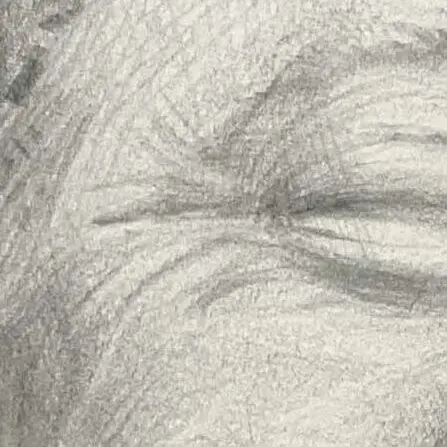
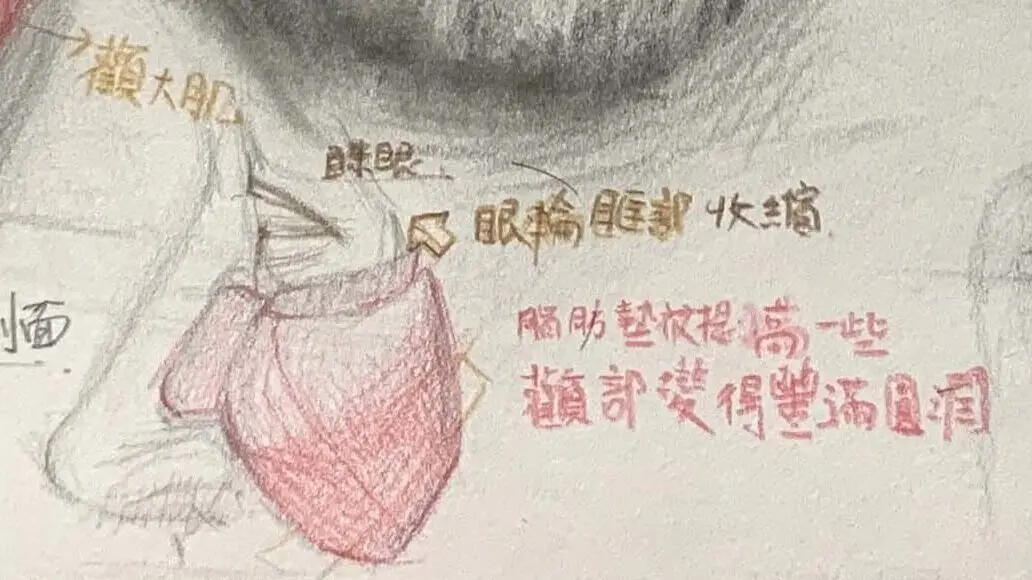
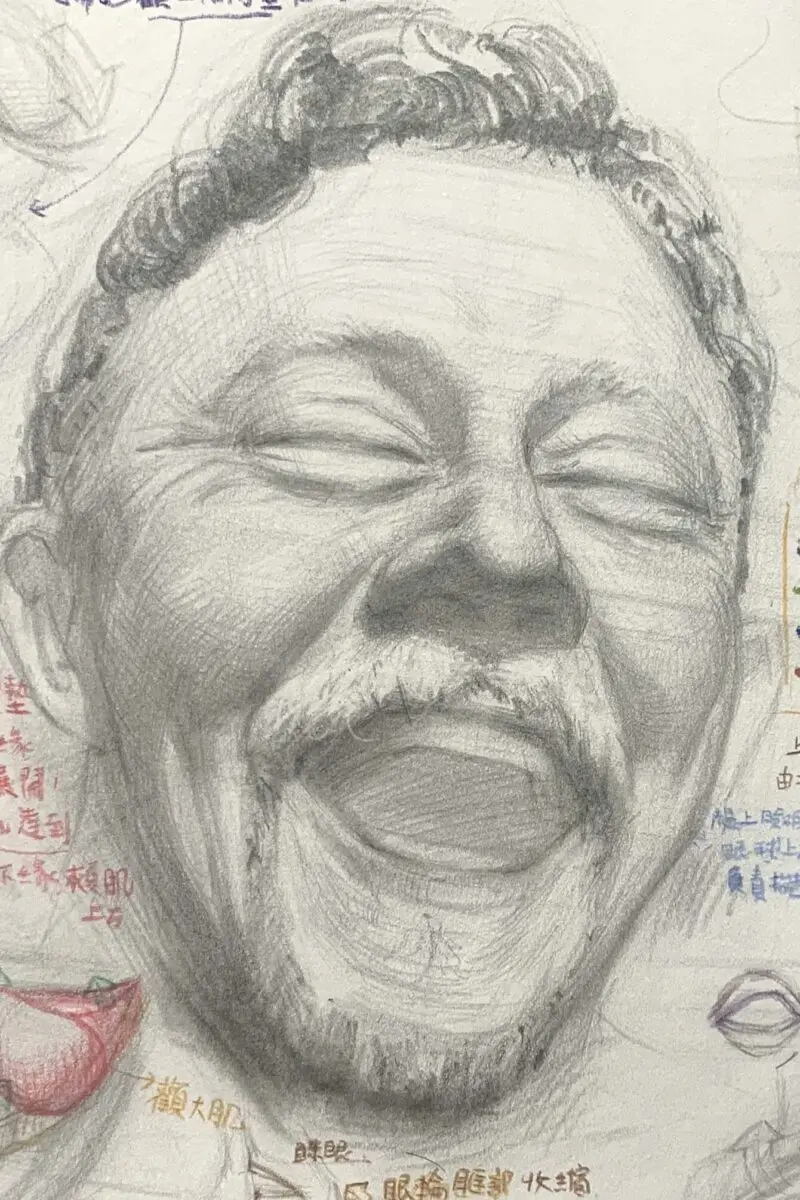
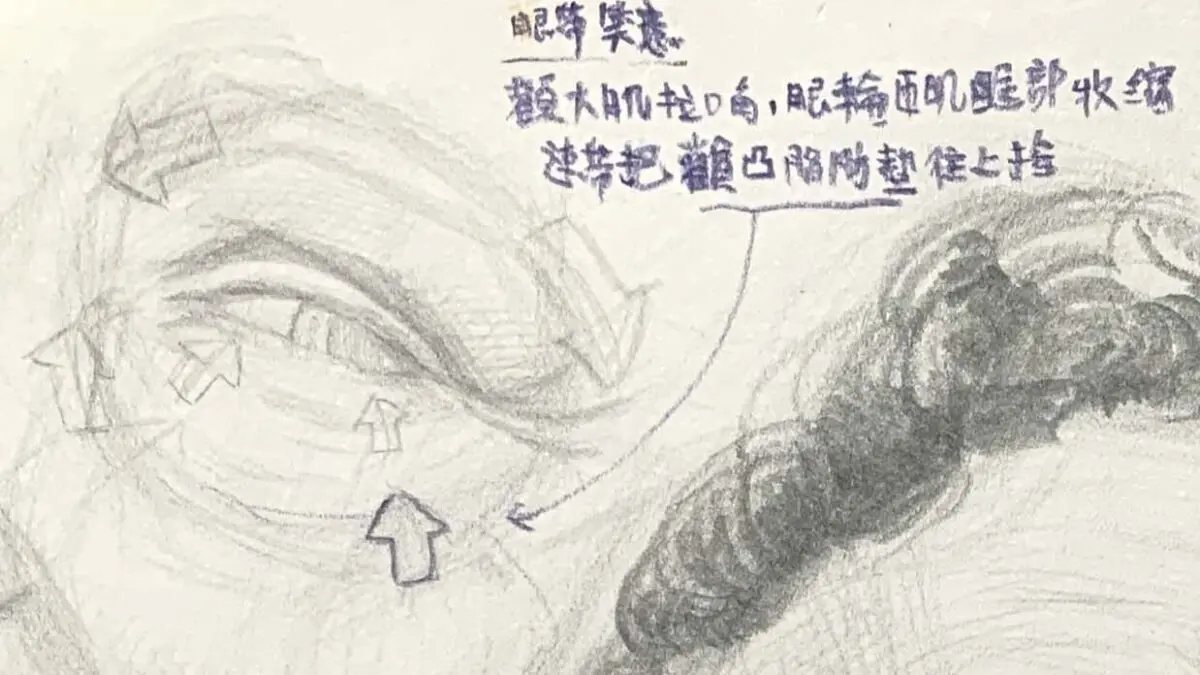
The orbicularis oculi muscle: shrinkage leads to wrinkles around the eyes (commonly known as crow's feet).
smiley
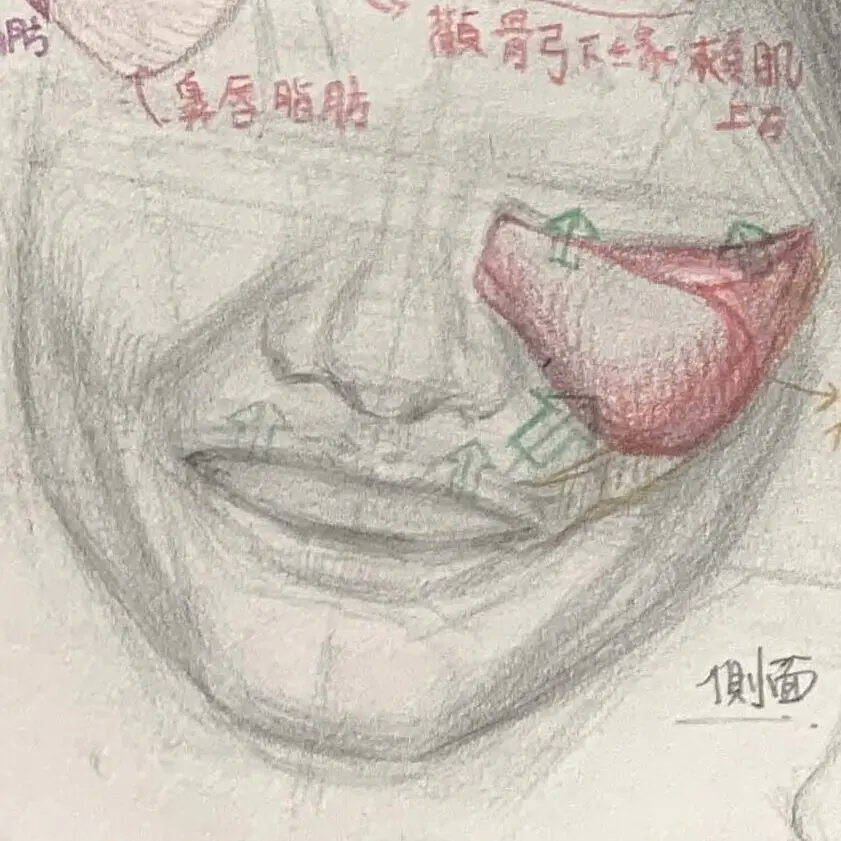
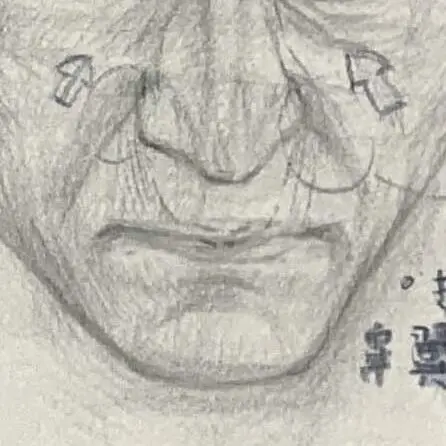
The zygomatic muscle pulls the corner of the cheek diagonally downward from the zygomatic bone, pulling the corner of the cheek upward and backward along with the skin of the cheek as it retracts.
This upward traction willIt also brings up the fat pads on top.The newer the cheekbones, the more prominent it is, the more it is "pushed" towards the under-eye and cheekbone areas.
The muscle and fat pads work together to round the zygomatic curve, making the zygomatic bulge more visually noticeable.
Suggestions for Smile Expressions:
Lift the corneal muscles to increase the height of the mouth's elevation
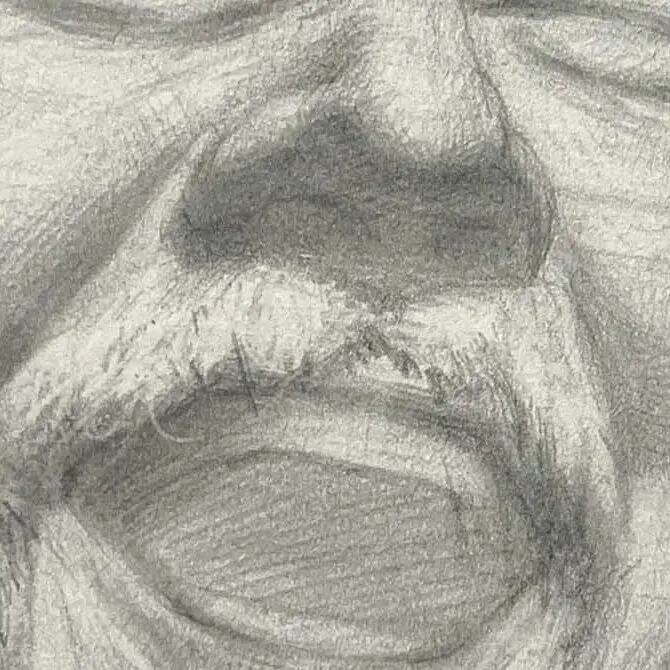
Lift the upper lip and nasal muscles to pull the nose upward.
Observe the smile to see the widening of the nose
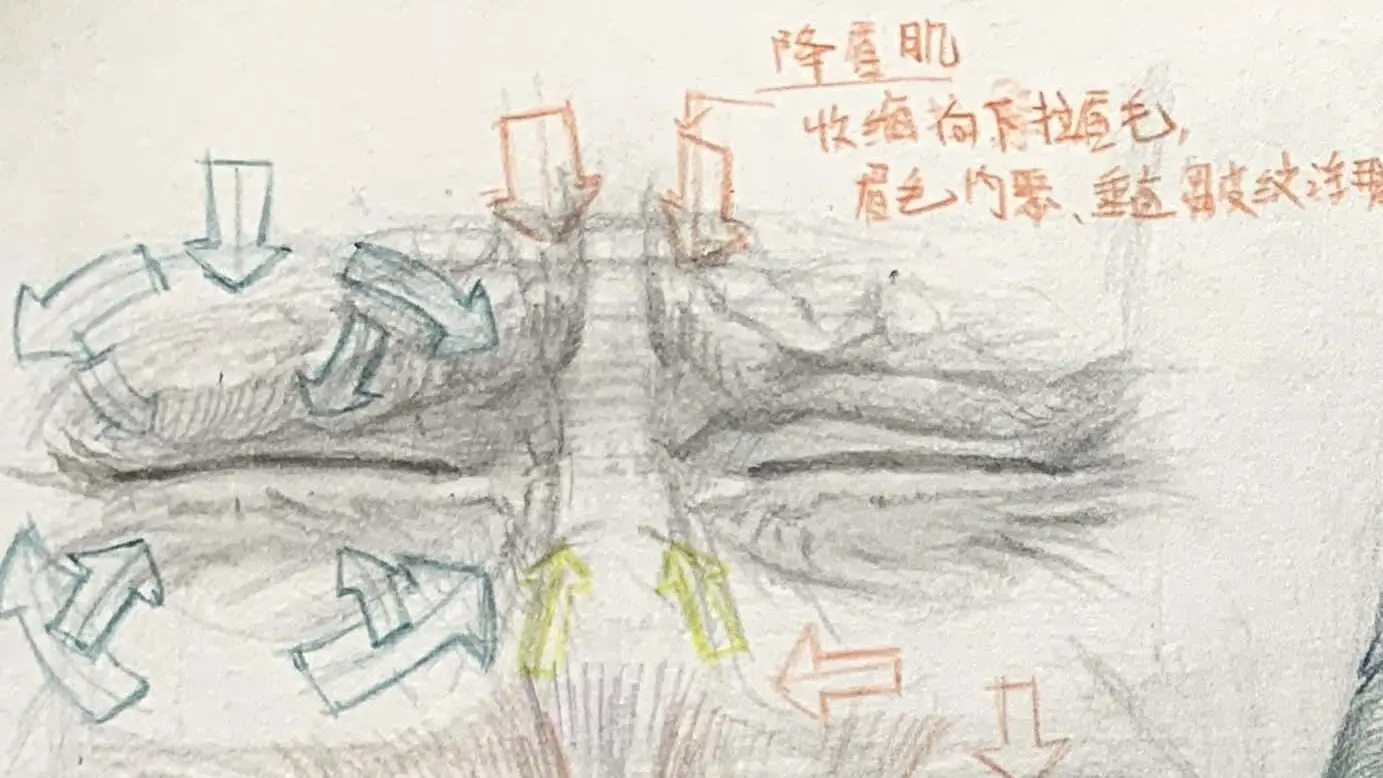
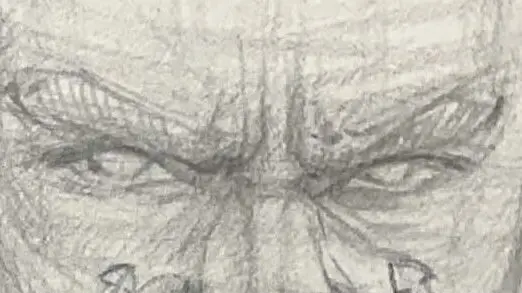
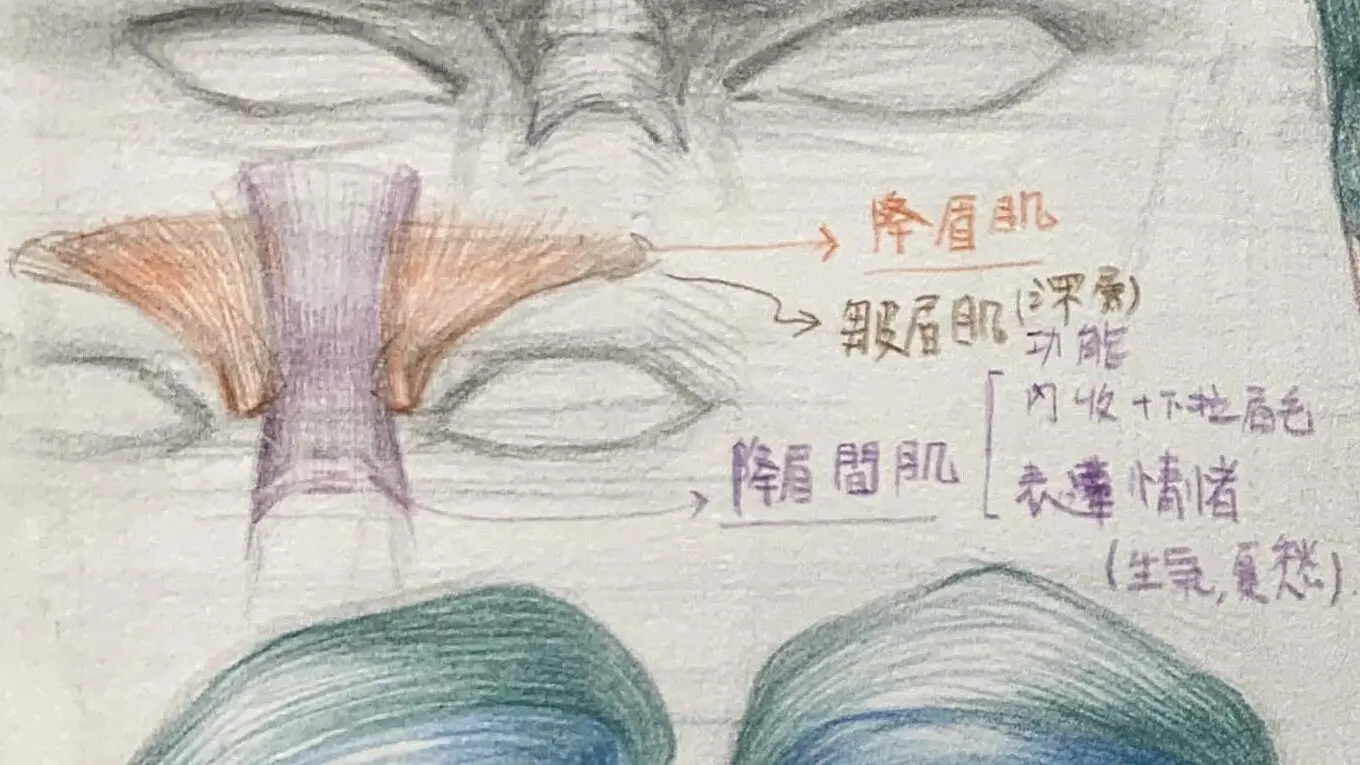
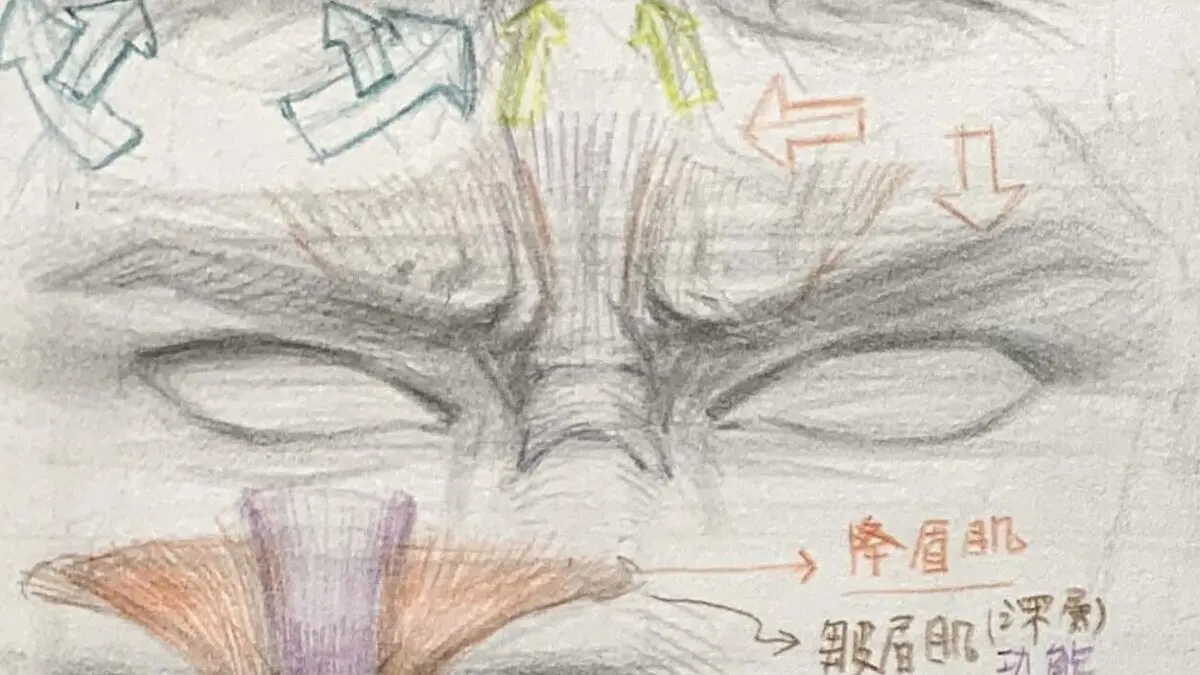
Eyebrow and Eye AreaSynchronized contraction of the orbicularis oculi + brow muscles + nasal wrinkles → tightening of the eyes + wrinkles between the brows
Cheek contours are "temporarily deformed" due to pressure.
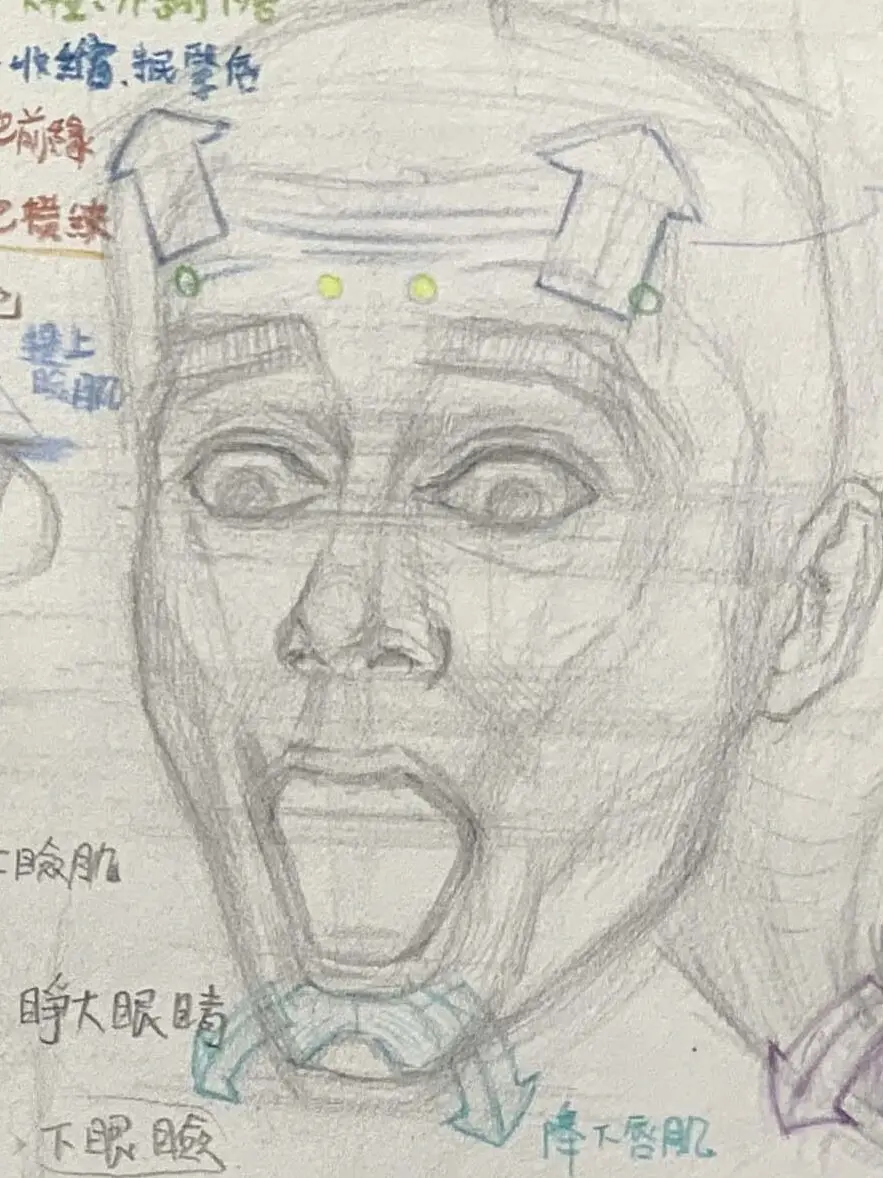
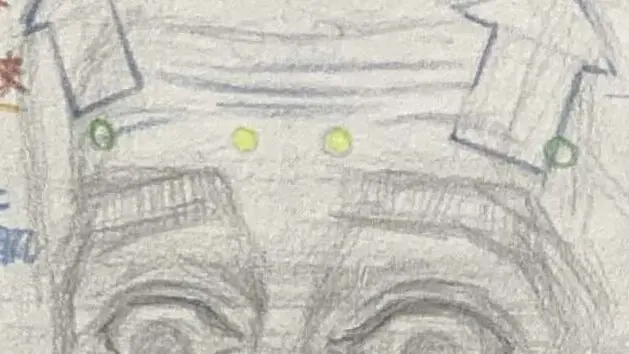
Frontalis Lift: Lift out horizontal wrinkles on the forehead
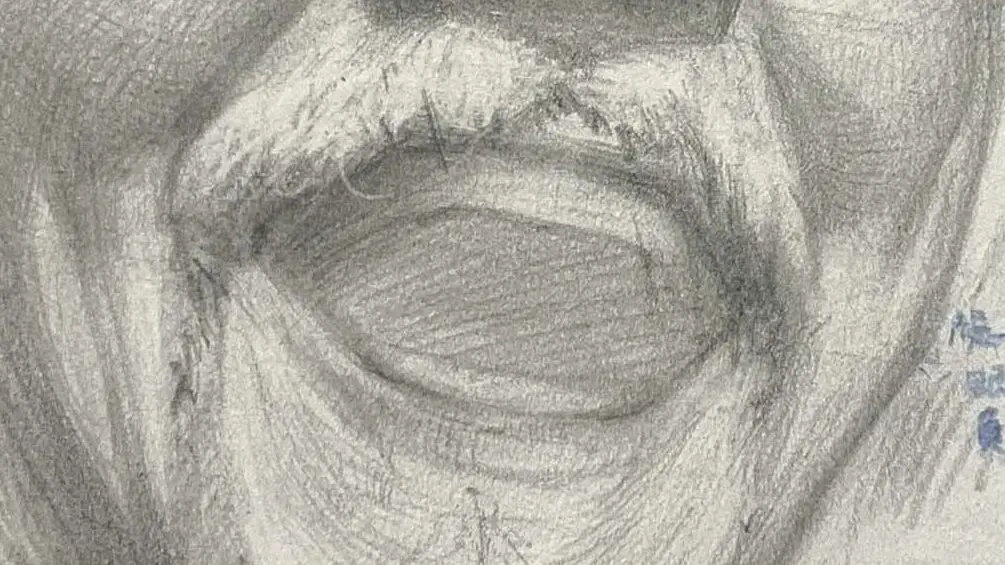
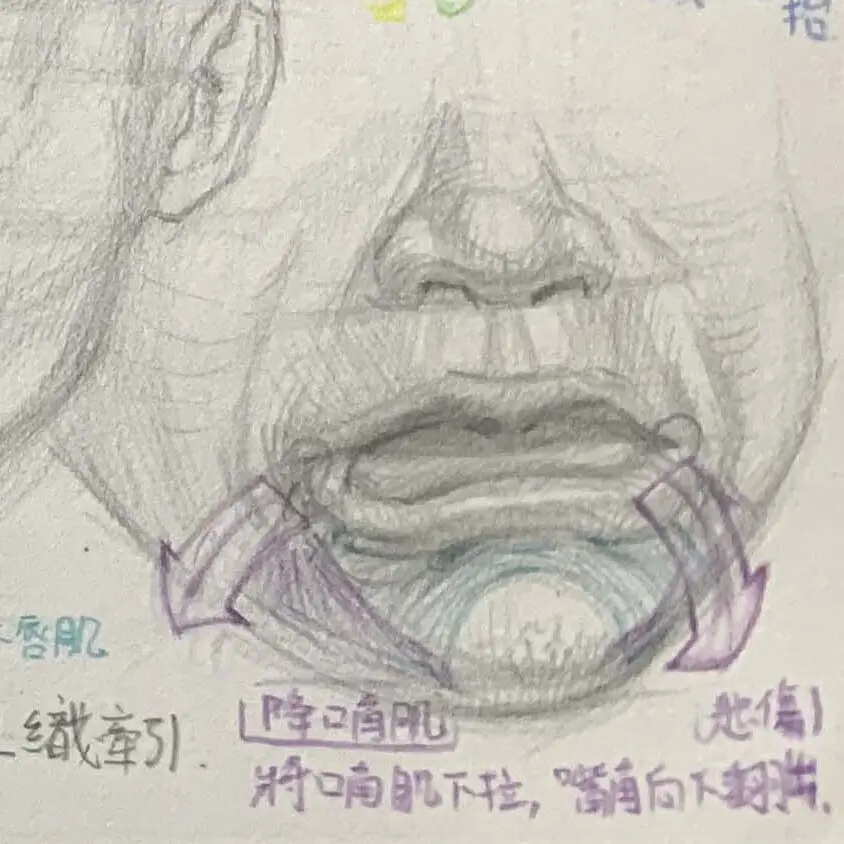
Open-mouth movement affects the entire jaw position → chin sinks downward
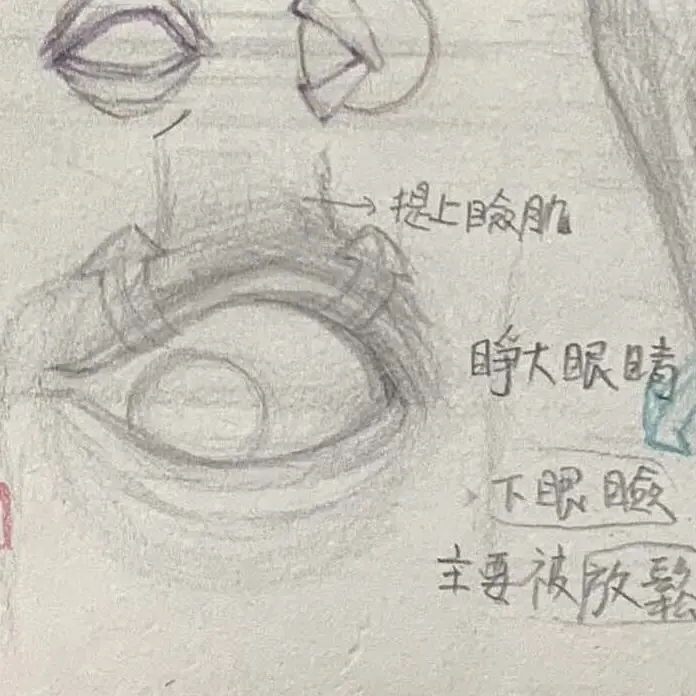
Brow lifting muscle action → double opening of the eyes
Surprise.Emoji Drawing Highlights:
Oval mouth shape, elongated jaws
The forehead needs to be visibly shaped, with the eyebrows arched upwards.
Eyebrows are raised upwards and the forehead is lifted to create horizontal wrinkles.
Upper eyelid contraction (eyes open wide) and relaxation of the orbicularis oculi muscle.
The mouth droops and opens, which may be accompanied by a relaxation of the jaw muscles.
ADDITIONAL: How do you observe/practice expressions?
Suggested way to practice expression drawing:
Drawing multiple moods on the same face → Contrasting the position of the muscles with the deformation of the fat mass.
Record your own expression changes and analyze facial details frame by frame.
Try the gradation exercise of "front → middle → high tension" for emotional expressions (e.g., smile → laugh).
Above is the introduction of emoji drawing. Do you have any difficulties in drawing emoji? Feel free to leave a comment or send me a private message.Instagram Exchanges. ―――――――――――――――――
If you want to learn to draw, but don't know how to start, or are interested in understanding what drawing is all about.