- 登入
- 註冊
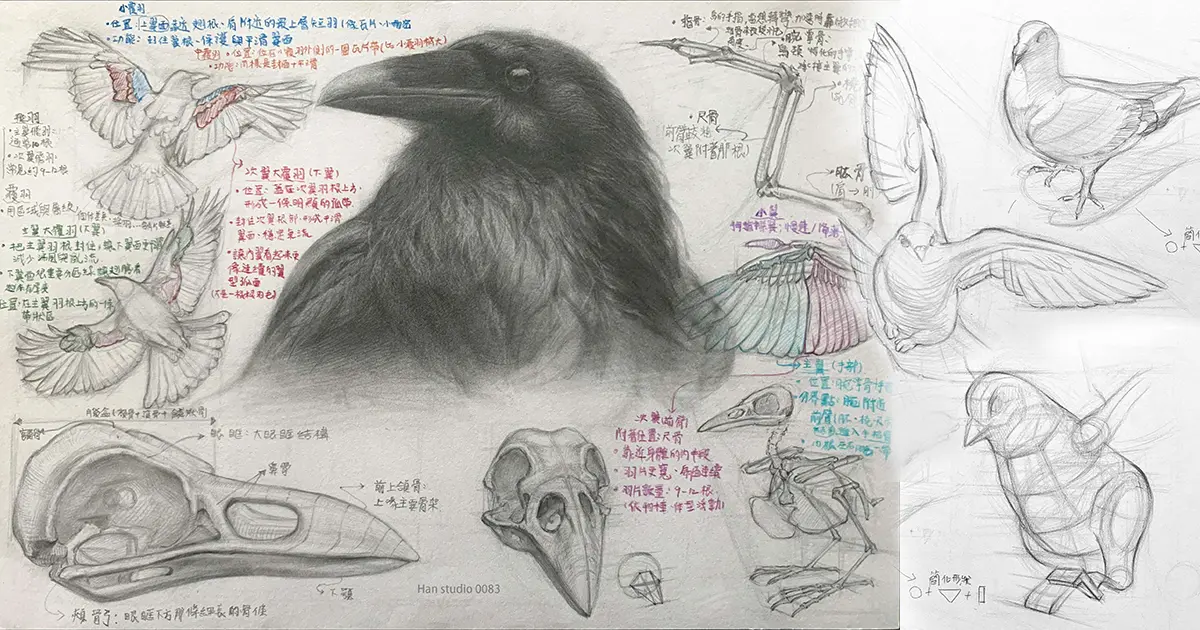
Before drawing for the wings, it is recommended to understand.
Let's not be fooled by the arrangement of the feathers, but let's see the volume of the wings first.
Wings are actually the forelimbs of birds.
It has shoulders, elbows, and wrists, and it follows a certain mechanical logic of operation
We'll take you through two structural manuscripts, from geometric generalizations to skeletal details, to reacquaint you with the wings.
Since the wing structures are similar, this article will use crow and pigeon wings as examples.
―――――――――――――――――
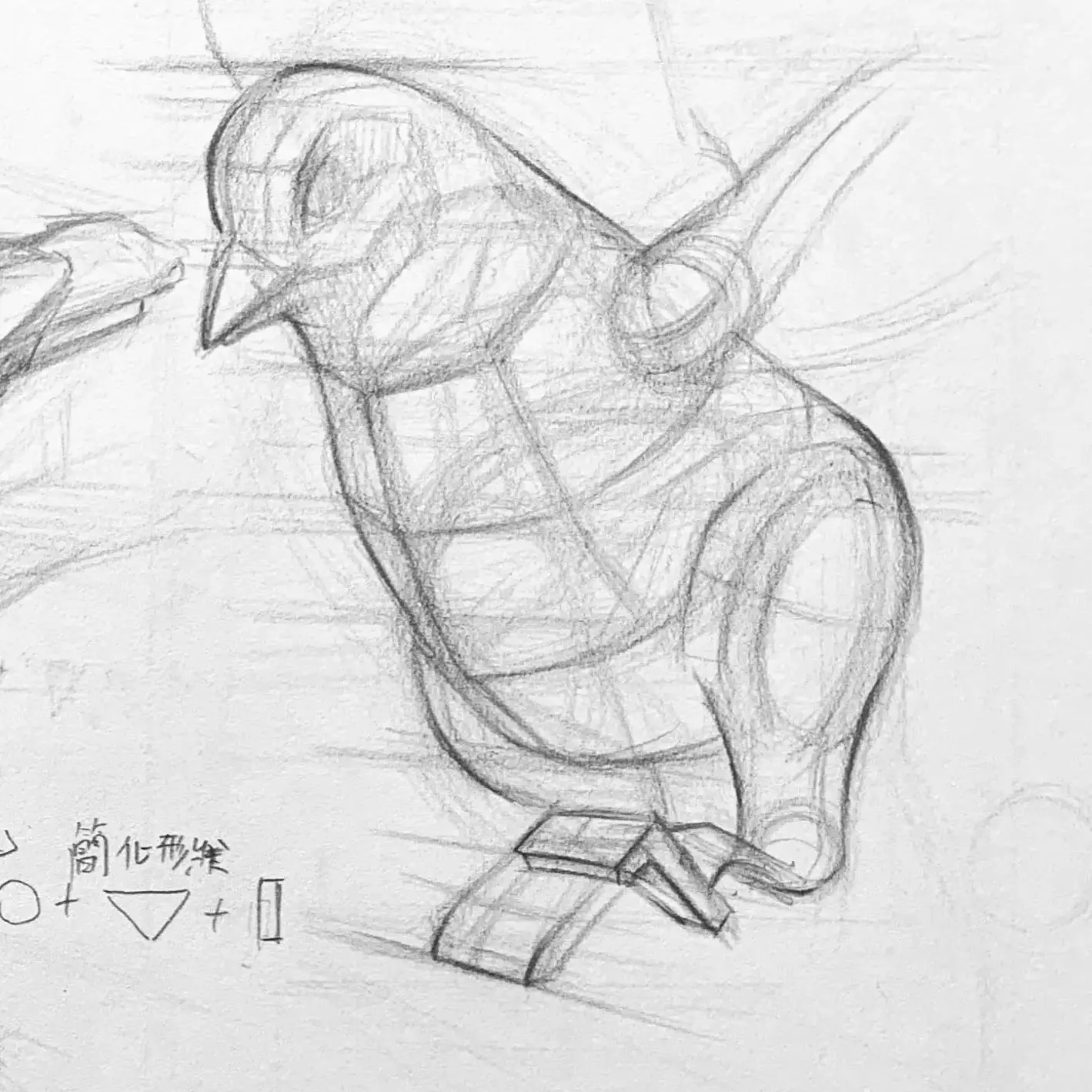
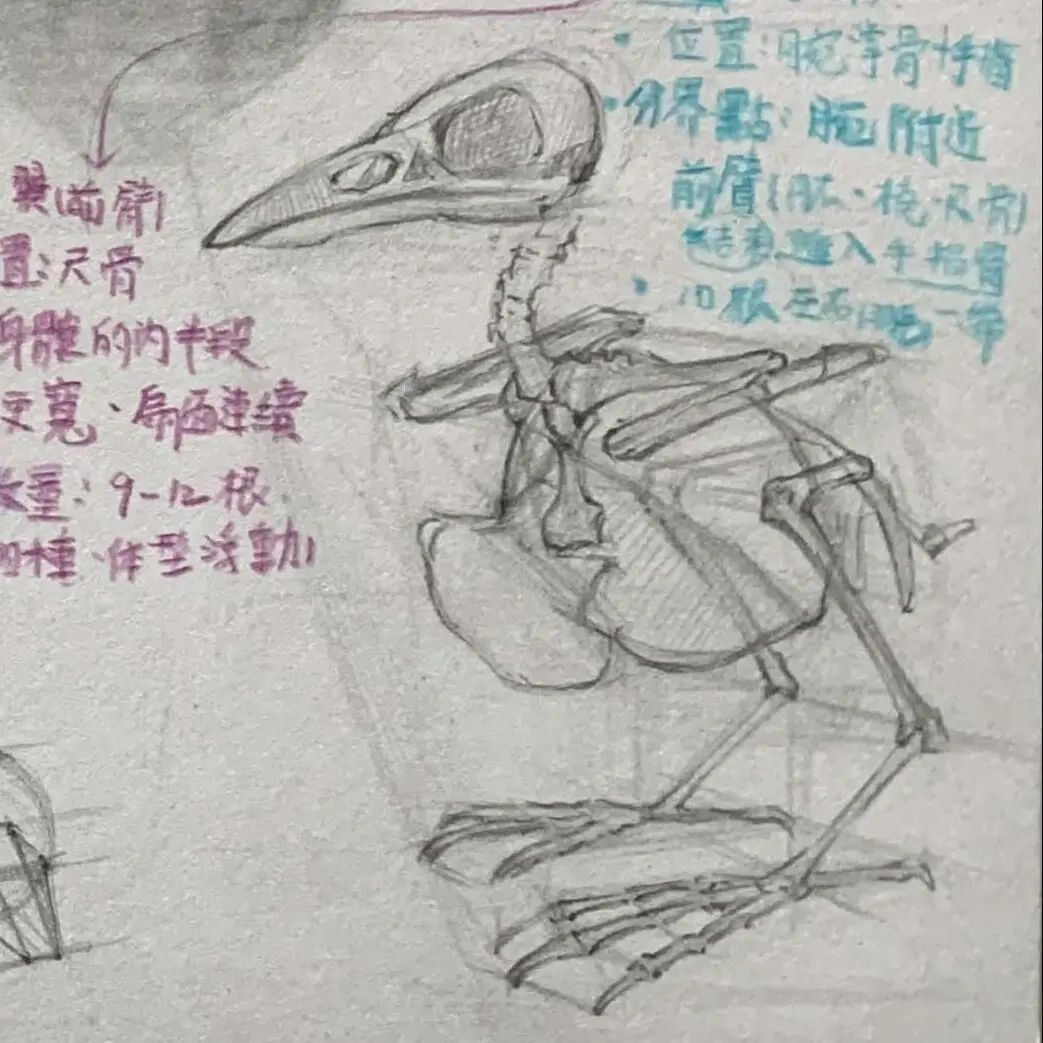
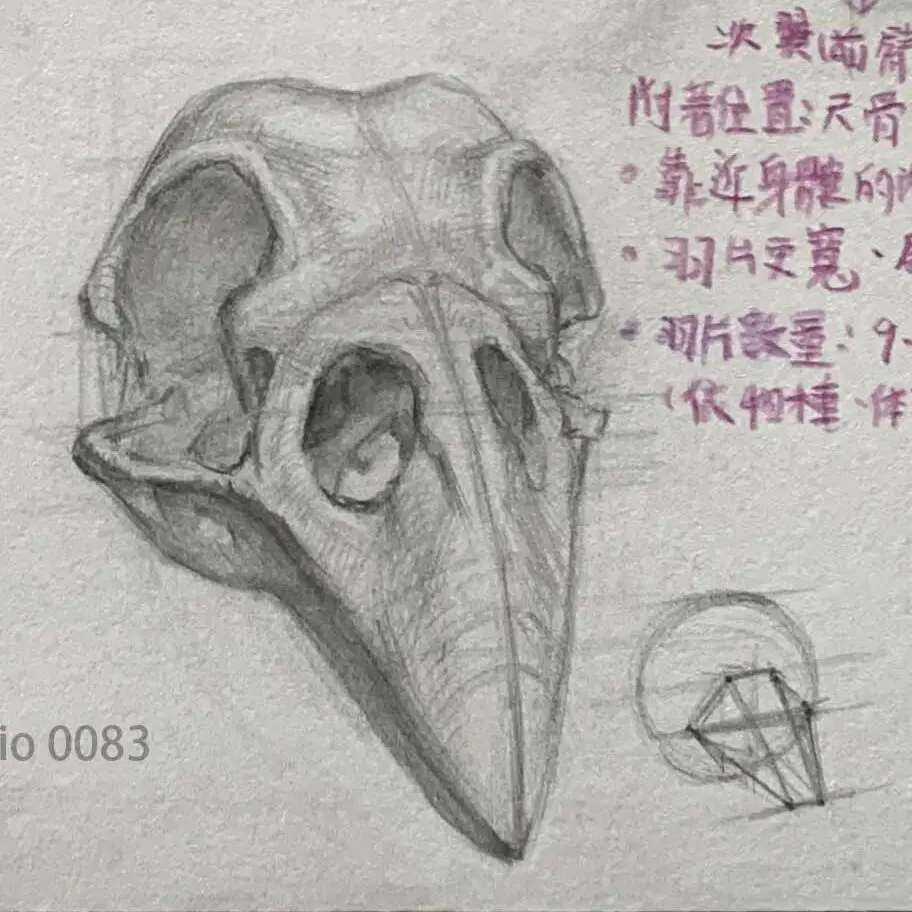
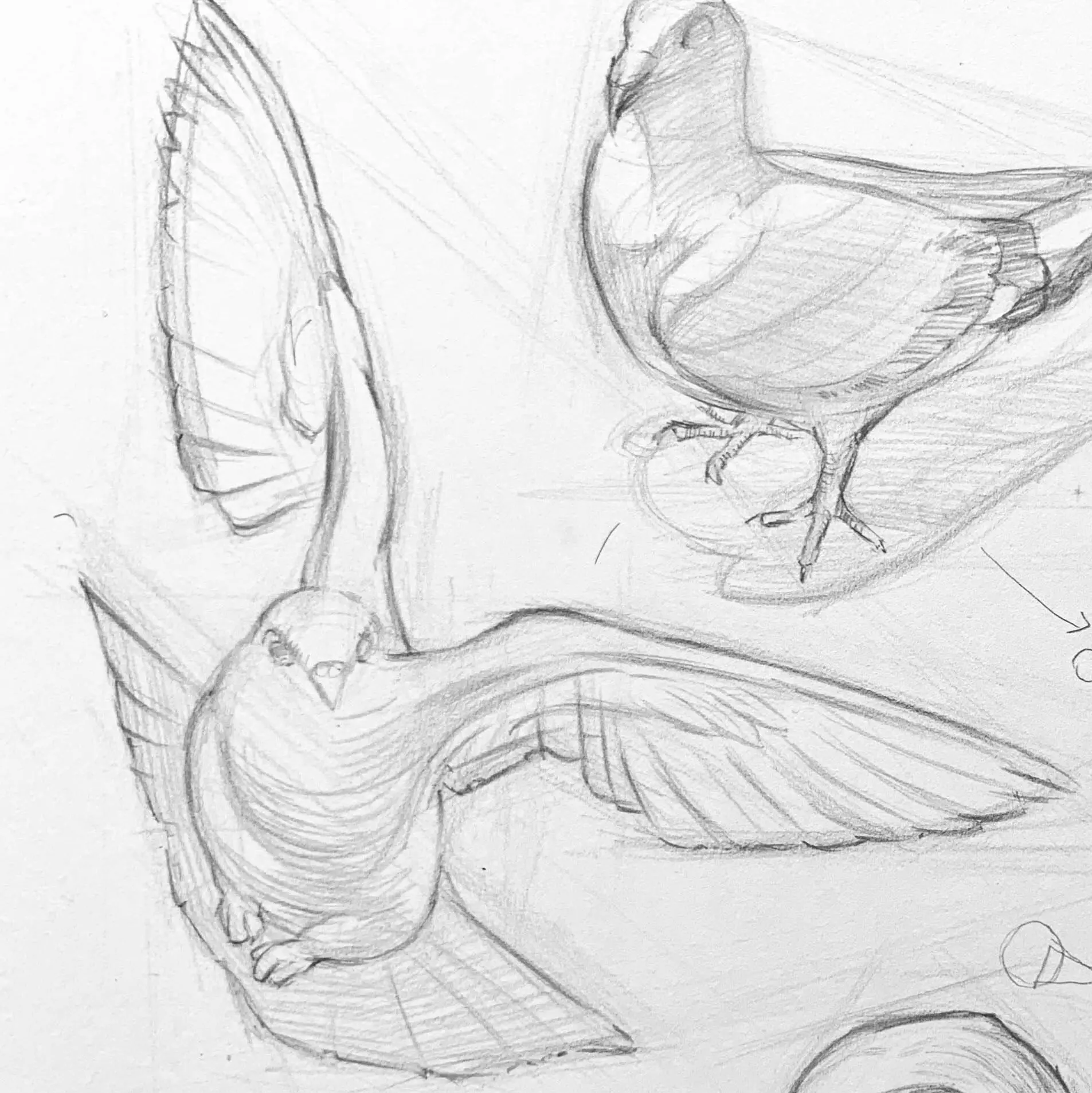
小Reminder: Only when we can break down the bird into these geometries in our minds will the bird begin to take on a sense of volume!
Look at this arm skeleton. The folding of the wings depends entirely on these three points:
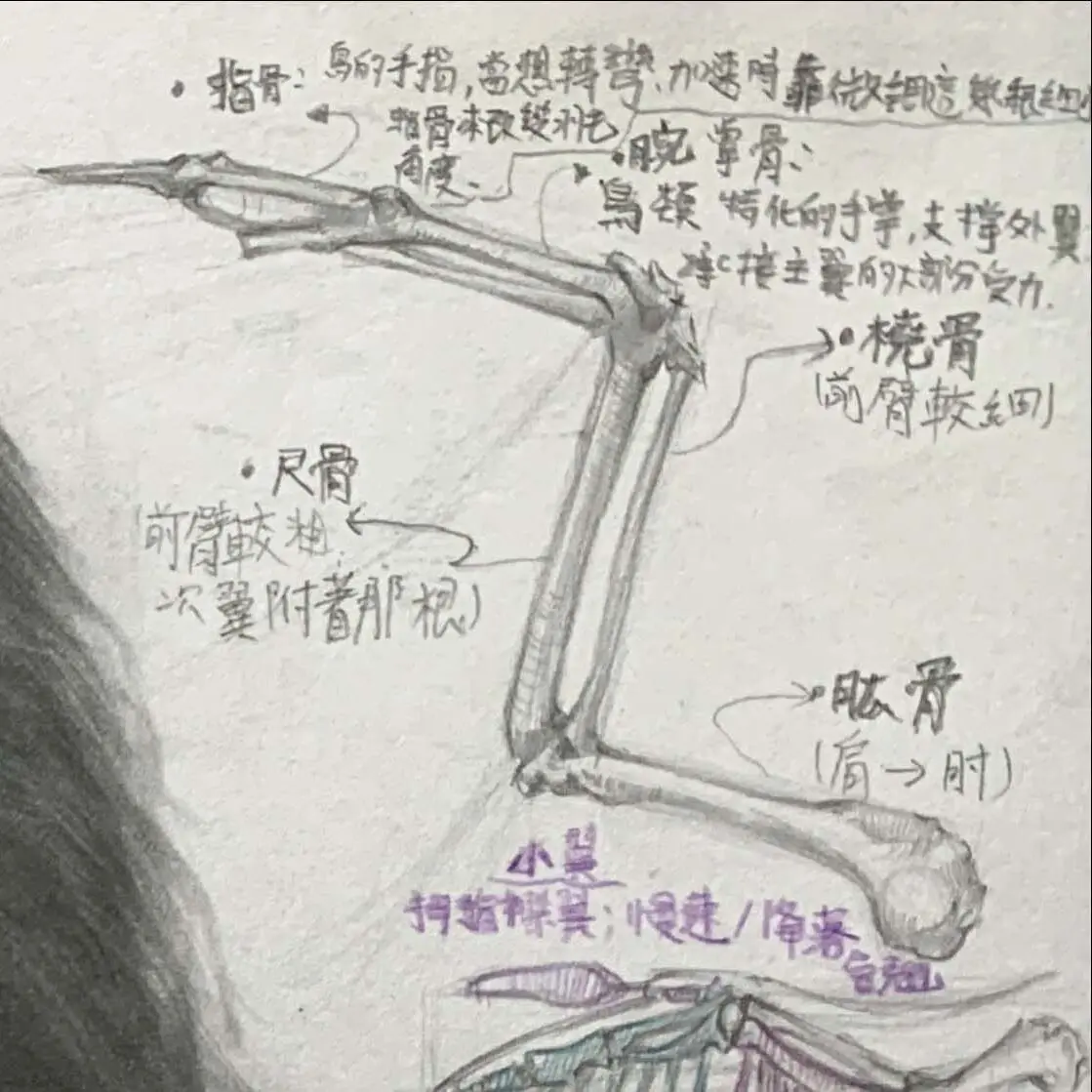
Shoulders : Attached to the trunk, usually covered by shoulder feathers.
The part that connects the body. This bone is short and stout, and is usually covered by the pectoral muscles and feathers, but it determines the thickness of the root when the wings are spread out
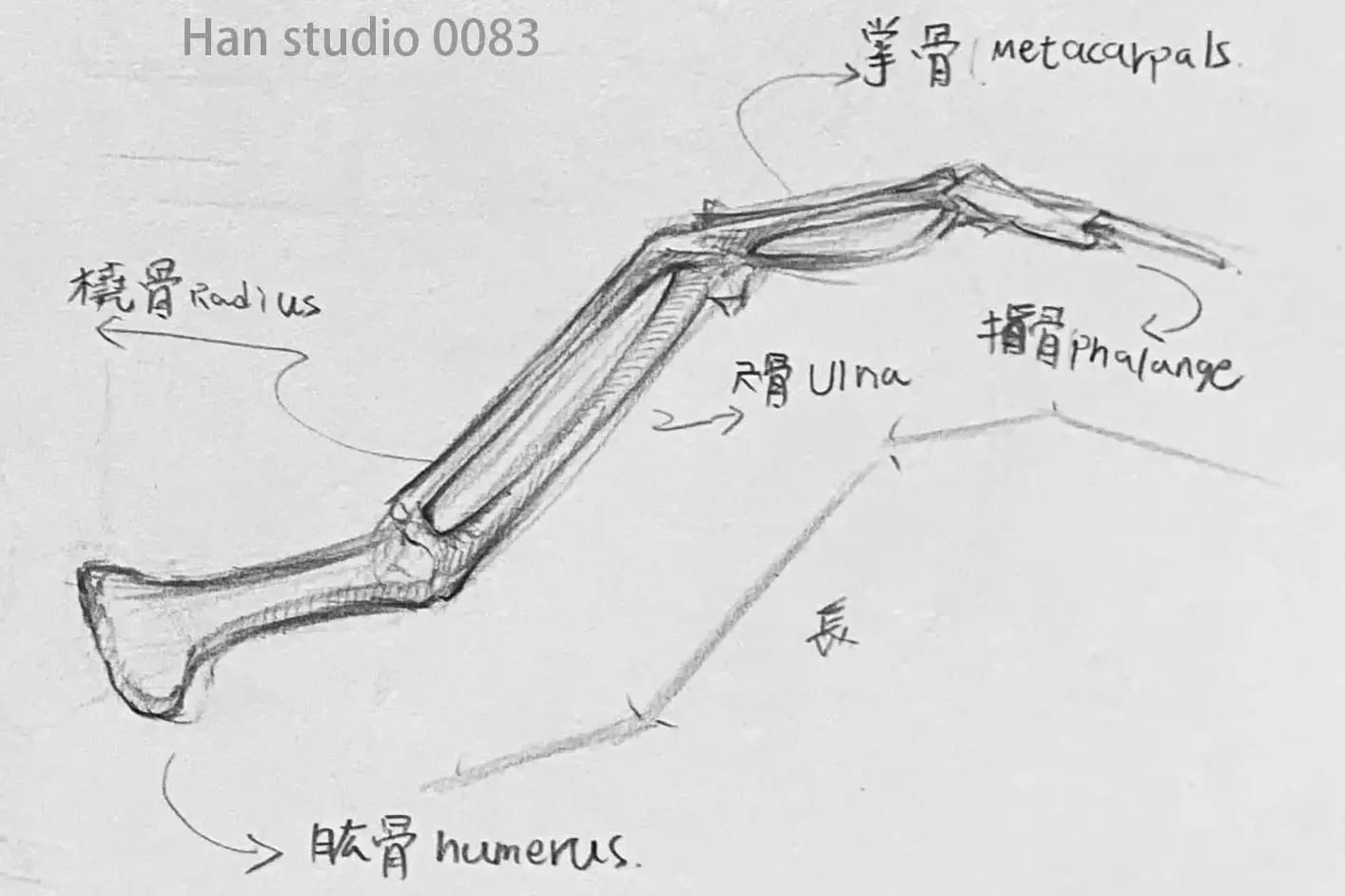
placement: Shoulder joint → Elbow joint (the main bone of the wing against the body).
functionality: Provides the primary leverage for wing flapping; flight muscles such as the pectoralis major transmit their power to the humerus through the shoulder girdle.
When the wings are retracted or half-open.Humerus (upper arm), ulna (forearm), metacarpal (palm) There will be a standard Z-shaped
: Drawing the wings in a smooth curve, forgetting that the bones underneath have "folds".
Elbow : Backward protruding pivot point
This is a long paragraph. Remember the "ulna" because it is theSecondary FeatherAttachment Points
placement: Elbow → wrist (forearm segment is two bones in parallel).
functionality:
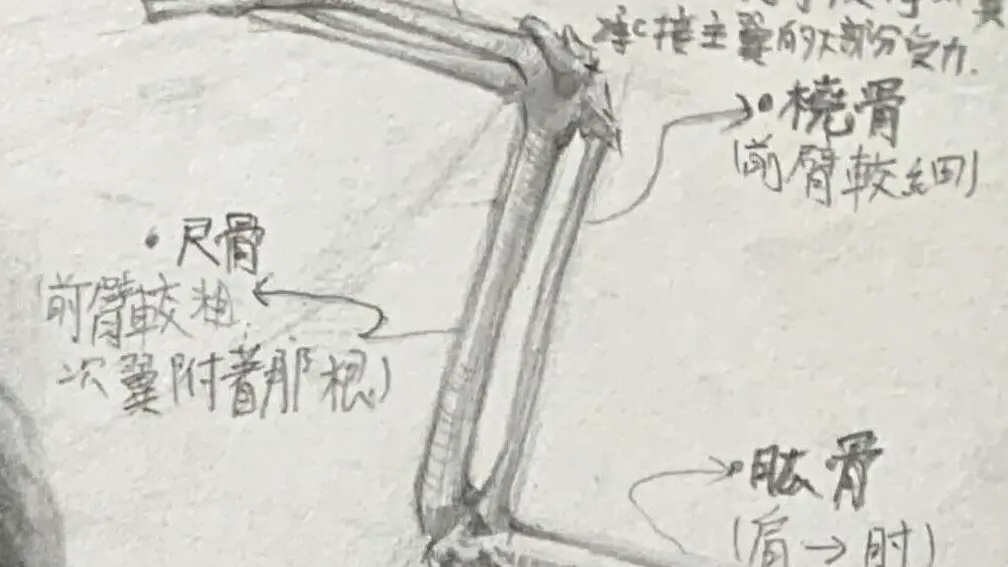
This is an important structural point! It is the only raised point on the leading edge of the wing (and where the winglets grow).
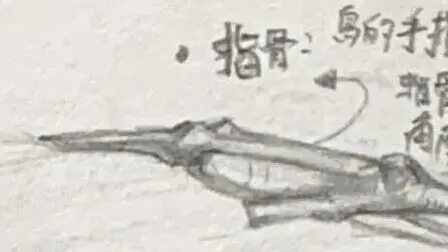
Why don't the wings open with a V-shaped notch like a human arm? Because of theectoderm (biology)(The line (skin and ligaments) connects the shoulder to the wrist. This line must be drawnTight and smoothIt is the key to the windward side of the wing.
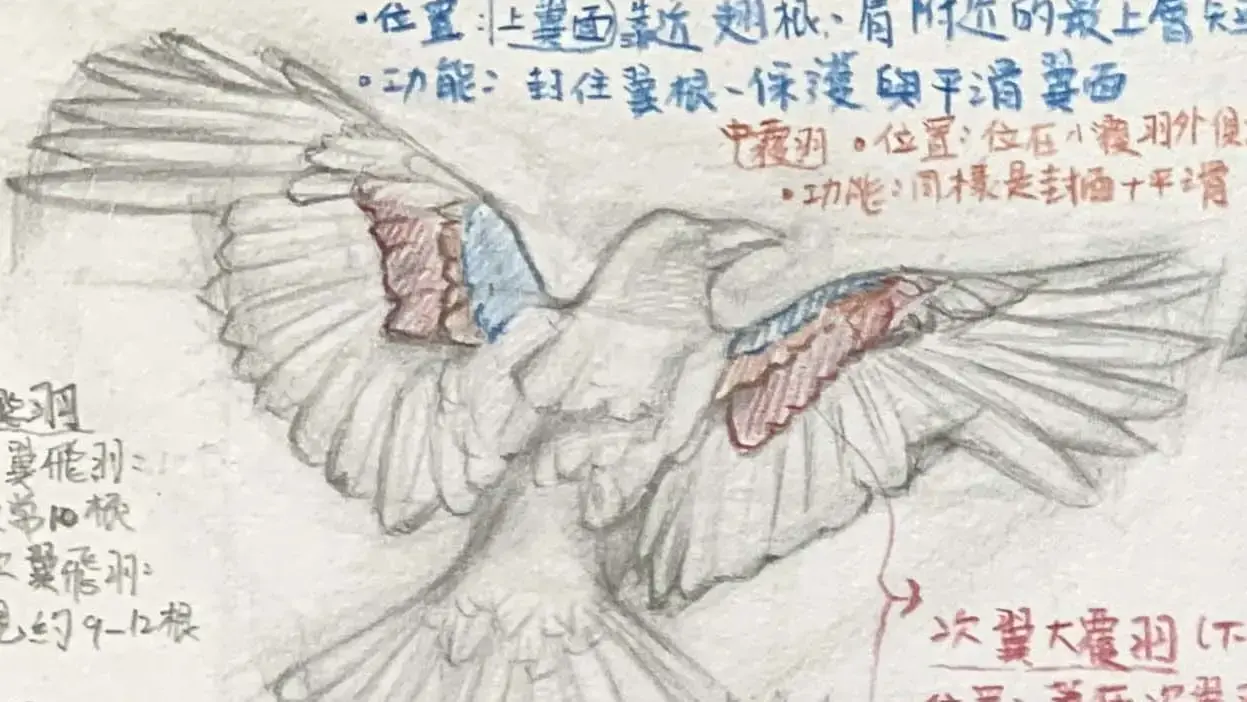
With the skeleton, we are like building a house with steel reinforcement, and then we have to put on the "roof tiles" (feathers).
Feathers don't grow randomly, they're zoned.
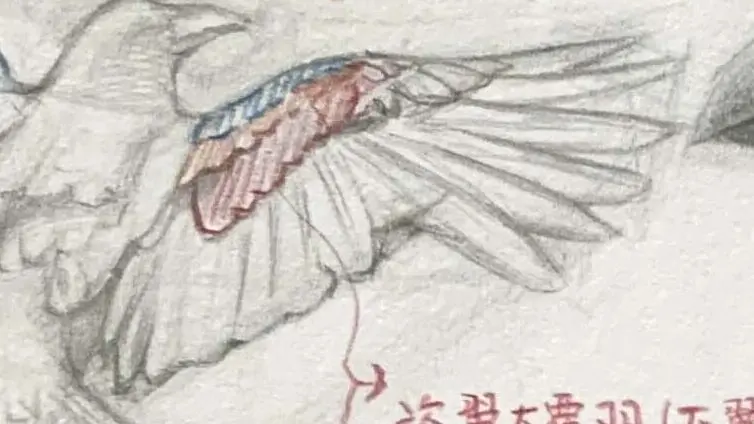
Once the skeleton is in place, we start "laying tiles". Remember this mantra:
→ fingers: It grows on the "palm" of the hand. It's thin, stiff, and it pushes.
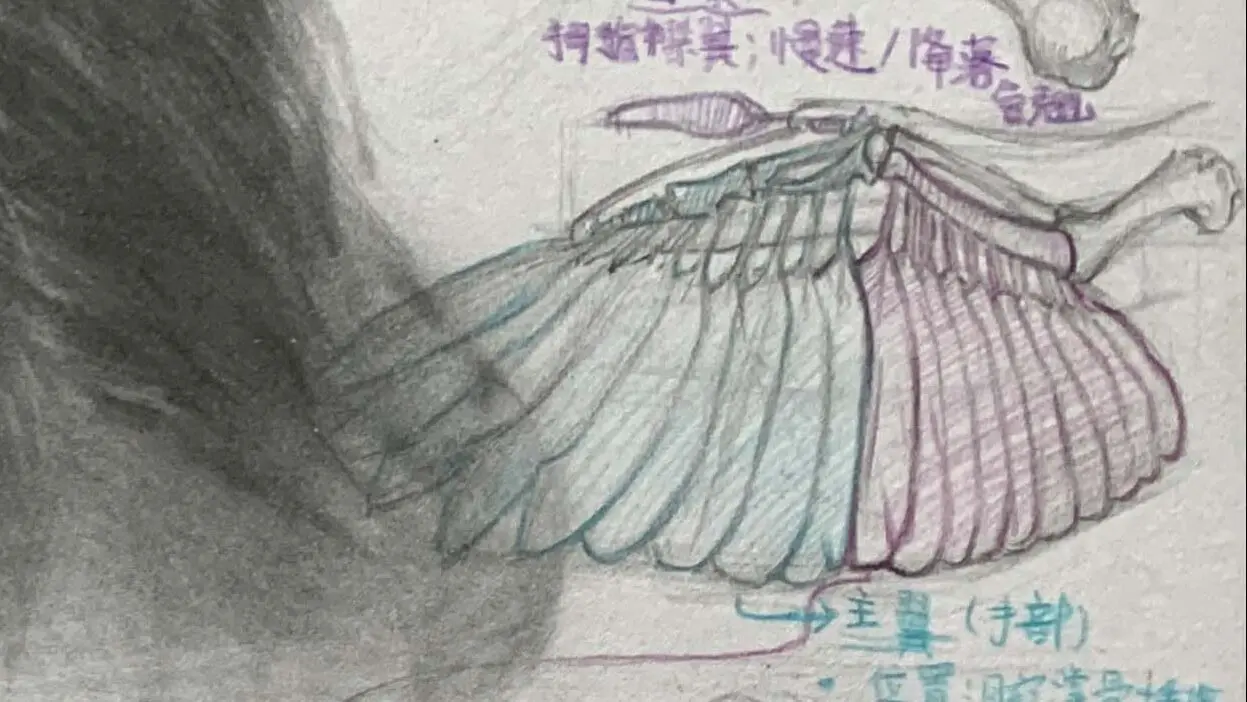
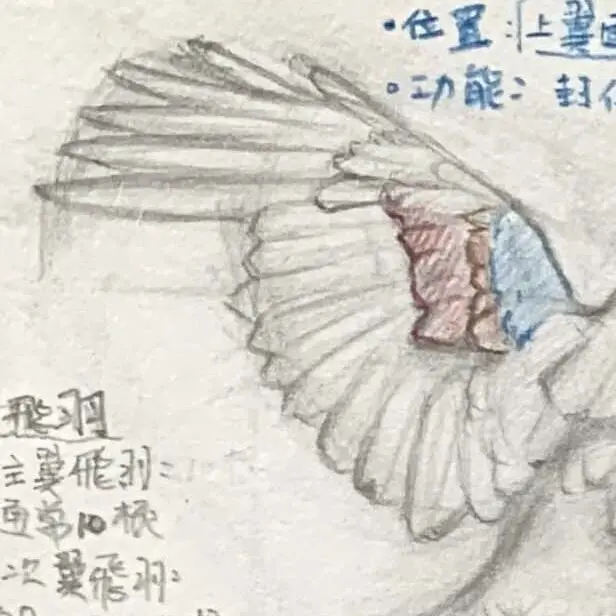
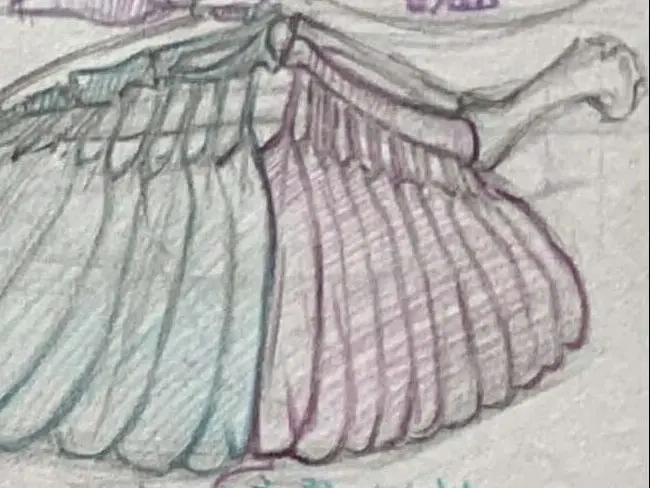
→ Arm: It's on the ulna.
Wide, rounded, responsible for lift, tightly arranged like blinds.
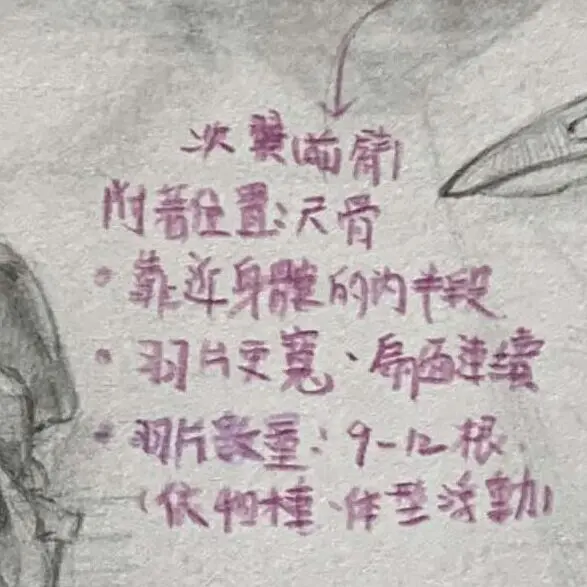
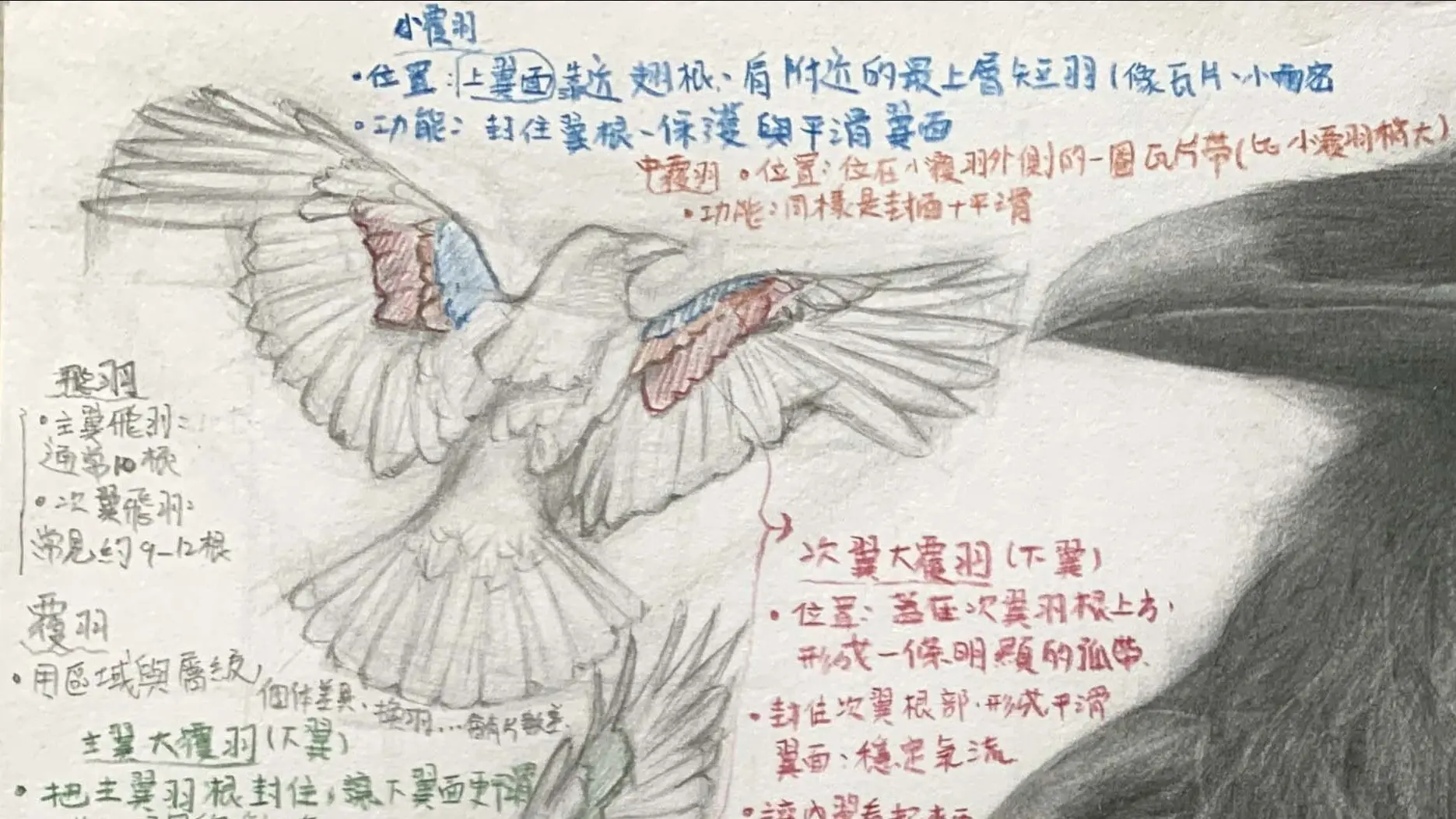
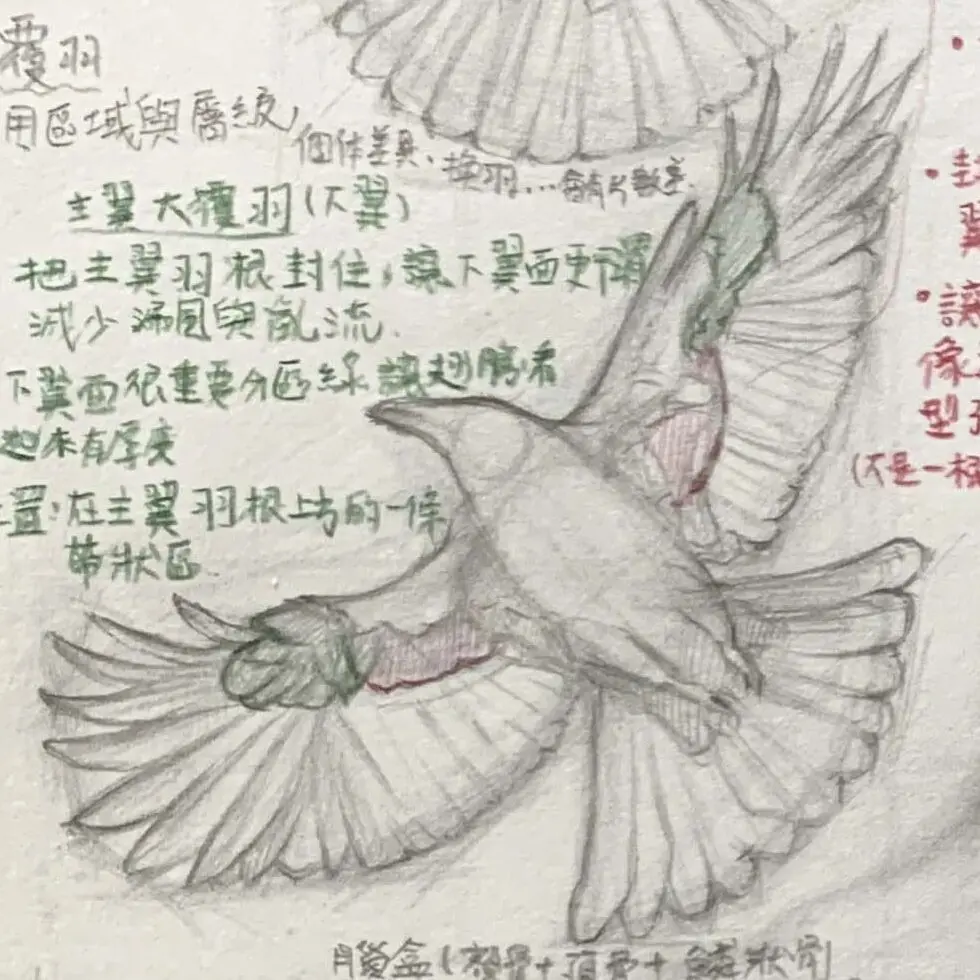
placement: Covering the roots of the flight feathers in layers.
• functionality: Smooths and streamlines the surface of the wing and protects the roots of the feathers.
• Highlights: Draw them in fish-scale-like layers, not as a single long hair, but as layers of "flakes".
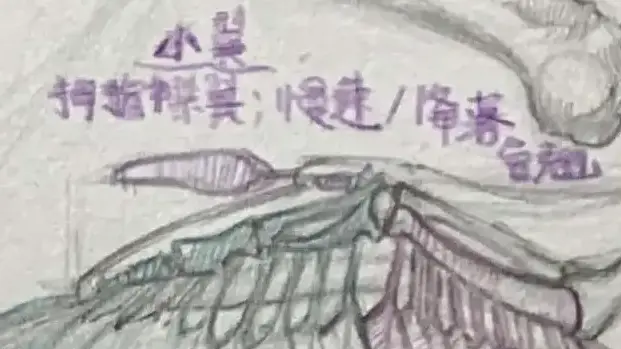
At the turn of the wrist, there is a bunch of small feathers that are raised, that is the "thumb" of birds. When you draw a crow, make it a little bit more protruding to increase the realism and vividness of the structure.
―――――――――――――――――
If you want to learn to draw, but don't know how to start, or are interested in understanding what drawing is all about.
Welcome to join line Contact meIn my classroom, I organize the way I learn to draw in a clear and organized way.
Click here to learn more about the Painting Program
―――――――――――――――――
The secret to a good wing painting is not whether you can draw the texture of each feather, but whether you understand what's underneath.Skeletal structure supportas well asCharacteristics of the zonal shape of the feathers。
When you understand that a crow's wing is an "extension of the arm", your painting is no longer just a flat pattern, but is equipped with anatomical logic and knowledge of three-dimensional structure.
Above is the introduction of how to draw wings, do you have any difficulties in drawing wings? Feel free to leave a comment or send me a private message.Instagram Exchanges.
Human Skull Sketch: Learn Anatomy for Accurate Portraits
Introduction to Arm Painting: Detailed Analysis of Skeletal Simplification and Movement Mechanisms
How to accurately grasp the proportions of the hand and sketch the structure of the joints.
How to Draw Ears:Simplified Ear Structure and Shading Tips
Facial Muscle Structure Analysis: Enhancing the Stereoscopic Sense of Figure Sketching
From Simple Contours to Detail: Mastering the Sketching of Eyes
Capturing Realism in Lip Drawing: Key Structures and Shading
Portrait Sketching Tips: Three Keys to Understanding Head Structure